

The Strategic Guide to Aluminum Alloy CNC Turning Services for High-Performance Industries
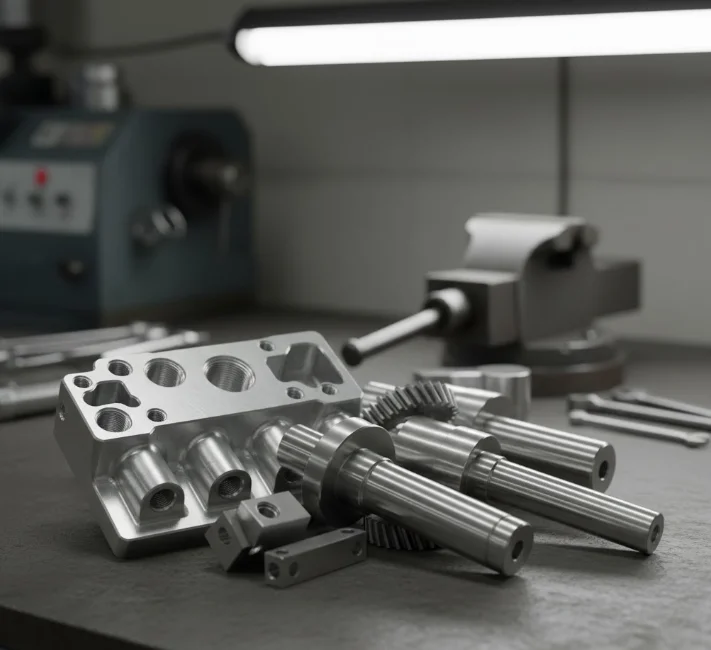
As modern industries continue to pursue lighter, stronger, and more efficient products, the importance of precision machining has never been greater. From aerospace structures and automotive systems to medical devices and consumer electronics, manufacturers are constantly challenged to improve performance while reducing weight and production costs.
Among the many manufacturing technologies available today, aluminum alloy CNC turning service has become one of the most important processes for producing high-precision, lightweight components. However, achieving superior results involves much more than simply removing material. Successful machining requires a deep understanding of aluminum metallurgy, machining dynamics, dimensional control, and surface engineering.
Why Aluminum Alloys Remain a Preferred Engineering Material
Aluminum has earned a dominant position in modern manufacturing because it offers a unique combination of advantages:
- Excellent strength-to-weight ratio
- Good corrosion resistance
- High thermal conductivity
- Excellent machinability
- Recyclability and sustainability
However, not all aluminum alloys perform the same way during machining.
Different grades exhibit significant differences in strength, hardness, chip formation behavior, and surface finish characteristics. Selecting the right material is often the first step toward achieving a successful project outcome.
Choosing the Right Aluminum Alloy for CNC Turning
One common misconception is that all aluminum alloys can be machined using the same strategy. In reality, each alloy requires specific tooling, cutting parameters, and process controls.
7075 Aluminum: Strength for Demanding Applications
For industries where structural performance is critical, 7075 aluminum CNC turning services are frequently selected.
This high-strength alloy is widely used in:
- Aerospace components
- Defense equipment
- Performance automotive parts
- Industrial machinery
The major advantage of 7075 aluminum is its exceptional strength-to-weight ratio, which can rival certain steel grades while maintaining a significantly lower weight.
However, its increased hardness also presents machining challenges, including:
- Higher tool wear
- Greater cutting forces
- Increased risk of edge chipping
Producing accurate components from 7075 aluminum requires advanced machining expertise and carefully optimized cutting strategies.
6061 Aluminum: Versatility and Corrosion Resistance
For applications where corrosion resistance, appearance, and manufacturability are priorities, 6061 aluminum turning service remains one of the most popular solutions.
Common applications include:
- Consumer electronics
- Marine equipment
- Industrial enclosures
- Medical devices
6061 aluminum offers excellent anodizing characteristics and generally produces superior surface finishes compared to many high-strength alloys.
The primary machining challenge is maintaining surface consistency while preventing microscopic tearing that could affect downstream finishing processes.
The Growing Importance of Advanced CNC Turning Technology
As product designs become more sophisticated, machining requirements continue to evolve.
Many modern components now incorporate multiple functional features into a single part to reduce assembly complexity and improve reliability.
Traditional turning operations often require multiple setups to achieve these geometries. However, each additional setup introduces potential alignment errors.
Multi-Axis CNC Turning Centers
Advanced precision CNC turning services for aluminum parts increasingly rely on multi-axis machining systems equipped with:
- Live tooling
- C-axis control
- Y-axis machining capability
- Integrated milling functions
These capabilities allow manufacturers to perform turning, drilling, tapping, and milling operations within a single setup.
The benefits include:
- Improved dimensional accuracy
- Reduced production time
- Better geometric consistency
- Lower risk of cumulative tolerance errors
For complex components, single-setup machining can significantly improve overall product quality.
Why Surface Finish Matters More Than Many Realize
Dimensional accuracy is only one aspect of precision manufacturing.
Surface quality directly affects:
- Mechanical performance
- Wear resistance
- Corrosion resistance
- Appearance
- Coating adhesion
For industries such as medical equipment, optics, and electronics, surface finish requirements can be extremely demanding.
Achieving Superior Surface Quality
High-quality precision turned aluminum components often require carefully controlled machining conditions, including:
- Optimized cutting speeds
- Precision tool geometry
- Stable machine platforms
- Effective chip evacuation
Advanced tooling materials such as carbide and polycrystalline diamond (PCD) tools are frequently used to achieve superior finishes while minimizing material deformation.
The Relationship Between Machining and Anodizing
Many aluminum components undergo secondary treatments after machining.
Among the most common finishing processes is aluminum anodizing service, which enhances:
- Corrosion resistance
- Surface hardness
- Wear performance
- Decorative appearance
However, anodizing quality depends heavily on the condition of the machined surface.
Microscopic defects such as:
- Burrs
- Tool marks
- Surface tearing
- Embedded contaminants
can negatively affect coating uniformity and long-term performance.
This is why machining and finishing should be considered as part of a unified manufacturing strategy rather than independent operations.
Engineering Collaboration Creates Better Results
One of the most overlooked aspects of CNC machining is Design for Manufacturability (DFM).
Many engineering drawings can be optimized before production begins, leading to:
- Lower manufacturing costs
- Improved component performance
- Faster production cycles
- Reduced inspection complexity
Examples include:
- Optimizing corner radii
- Adjusting thread specifications
- Improving tool accessibility
- Simplifying complex geometries
Early collaboration between design engineers and machining specialists often produces significant long-term benefits.
Why Manufacturers Choose AICHI TECHNOLOGY
As precision requirements continue to increase across industries, selecting the right machining partner has become increasingly important.
AICHI TECHNOLOGY combines engineering expertise with advanced manufacturing capabilities to deliver reliable aluminum alloy CNC turning services for demanding applications.
The company's strengths include:
Comprehensive Material Expertise
Experience machining a wide range of aluminum grades, including 6061, 7075, and other specialized alloys.
Advanced Manufacturing Equipment
Modern CNC turning centers support high-precision machining and complex component production.
Focus on Quality and Consistency
Strict process control ensures repeatable accuracy across prototype, low-volume, and mass-production projects.
Engineering-Oriented Support
Design optimization and manufacturing consultation help customers improve both product performance and production efficiency.
Looking Ahead
As industries continue pursuing lightweight design, energy efficiency, and advanced product performance, aluminum alloys will remain a critical engineering material.
At the same time, advancements in CNC technology, tooling systems, automation, and process monitoring will further expand the capabilities of precision machining.
Manufacturers that combine material expertise, advanced equipment, and strong engineering support will be best positioned to meet the growing demand for high-performance aluminum components.
Final Thoughts
An effective aluminum alloy CNC turning service is about much more than machining parts to a drawing. It involves understanding material behavior, maintaining dimensional precision, optimizing surface quality, and supporting long-term product performance.
From high-strength aerospace components to corrosion-resistant consumer products, precision-turned aluminum parts continue to play a vital role in modern manufacturing. By integrating advanced machining technologies with engineering-driven problem solving, companies such as AICHI TECHNOLOGY help transform complex designs into reliable, high-quality components ready for real-world applications.
https://www.wxaichi.com/the-strategic-guide-to-aluminum-alloy-cnc-turning-services.html

 English
 Arabic
 French
 Spanish
 Portuguese
 Deutsch
 Turkish
 Dutch
Dutch
 Russian
 Romaian
 Portuguese (Brazil)
 Greek
Greek
 简体中文
简体中文
 日本語
日本語
 한국어
한국어
 繁体中文
繁体中文