

From Raw Bar to Rotational Precision: Inside the Manufacturing of Shaft Machined Parts
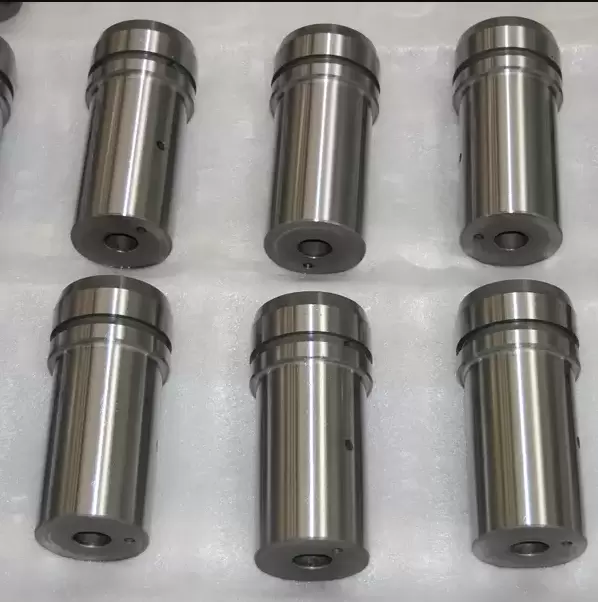
In almost every mechanical system that involves motion—whether rotation, transmission, or alignment—shaft machined parts play a foundational role. From industrial motors and gearboxes to automotive systems, medical devices, and automation equipment, shafts are responsible for transferring torque, maintaining alignment, and ensuring long-term operational stability.
The manufacturing of shaft machined parts is therefore not a basic machining task, but a highly controlled process that integrates material science, precision machining, dimensional control, and quality assurance. At Jiangxi Hongdu Preciosion Machinery, shaft manufacturing is approached as a system-level engineering discipline rather than a single production step, ensuring consistency, reliability, and performance across diverse applications.

Understanding Shaft Machined Parts in Industrial Applications
Shaft machined parts are typically cylindrical components designed to transmit rotational motion or support rotating elements such as gears, pulleys, bearings, or couplings. Depending on application requirements, shafts may include:
-
Steps, shoulders, or tapers
-
Keyways or splines
-
Threads or grooves
-
Precision bearing seats
Each feature introduces additional complexity and tolerance requirements, making professional manufacturing essential.
Material Selection: The Foundation of Shaft Performance
The manufacturing process begins long before machining—with material selection. Shaft performance is directly influenced by mechanical properties such as strength, fatigue resistance, hardness, and corrosion behavior.
Common materials include:
-
Carbon steel for general-purpose shafts
-
Alloy steel for high-load or high-speed applications
-
Stainless steel for corrosion-resistant environments
-
Special alloys for extreme temperature or wear conditions
At Jiangxi Hongdu Preciosion Machinery, material selection is matched to operating load, rotational speed, environmental exposure, and service life expectations, ensuring that the shaft performs reliably throughout its lifecycle.
Core Machining Processes in Shaft Manufacturing
Precision Turning
Turning is the primary process used to achieve cylindrical geometry and concentricity. CNC lathes enable tight diameter tolerances and consistent surface finishes, which are critical for bearing interfaces and coupling zones.
Milling and Slotting
Secondary operations such as milling are used to produce keyways, flats, or slots. These features must be accurately positioned to maintain torque transmission efficiency and prevent assembly misalignment.
Drilling and Threading
Axial holes, cross-holes, and threaded sections are often required for fastening, lubrication, or weight reduction. Precision drilling ensures correct alignment without compromising shaft balance.
Advanced Processes for High-Performance Shafts
Heat Treatment
Heat treatment enhances hardness, wear resistance, and fatigue strength. Processes such as quenching, tempering, or induction hardening are applied selectively depending on functional requirements.
Grinding and Superfinishing
For high-precision applications, grinding is used to achieve tight tolerances, roundness, and low surface roughness. This is especially important for bearing seats and sealing surfaces.
Surface Treatments
Surface coatings or treatments—such as black oxide, chrome plating, or nitriding—improve corrosion resistance, reduce friction, and extend service life.
Dimensional Accuracy and Tolerance Control
The functional success of shaft machined parts depends heavily on dimensional accuracy. Critical parameters include:
-
Diameter tolerance
-
Concentricity and coaxiality
-
Straightness
-
Surface roughness
Jiangxi Hongdu Preciosion Machinery applies process control methods and in-process inspection to maintain consistency, even in high-volume production. Precision measuring tools such as micrometers, roundness testers, and coordinate measuring machines (CMMs) are used to verify compliance.
Quality Assurance Throughout the Manufacturing Process
Quality is not inspected into a shaft—it is built into every stage of manufacturing. A structured quality system ensures that defects are prevented rather than corrected.
Key quality control steps include:
-
Incoming material inspection
-
In-process dimensional checks
-
Final inspection and functional verification
-
Traceability of production batches
This disciplined approach reduces variability and ensures that shaft machined parts perform reliably in demanding industrial environments.
Custom Shaft Manufacturing for Application-Specific Needs
Standard shafts are often insufficient for modern machinery. Custom shaft machined parts are required to meet unique mechanical, spatial, or performance constraints.
Jiangxi Hongdu Preciosion Machinery supports customized manufacturing, including:
-
Non-standard diameters and lengths
-
Complex multi-step geometries
-
Integrated splines or special keyways
-
Tight-tolerance bearing and seal interfaces
This flexibility allows customers to optimize system design without compromise.
Application Industries Served
Industrial Machinery and Automation
Shafts are widely used in conveyors, reducers, actuators, and automation modules where precision and durability are critical.
Automotive and Transportation
High-strength shaft machined parts support engines, transmissions, steering systems, and auxiliary equipment.
Energy and Power Equipment
Used in motors, generators, pumps, and compressors where rotational stability and fatigue resistance are essential.
Medical and Precision Equipment
Low-vibration, high-accuracy shafts are required for imaging systems, diagnostic equipment, and laboratory machinery.
Conclusion
The manufacturing of shaft machined parts is a critical enabler of mechanical performance across industries. From material selection to final inspection, every step influences how effectively a shaft transmits motion, resists wear, and maintains alignment. With a focus on precision machining, robust quality control, and customization capability, Jiangxi Hongdu Preciosion Machinery provides shaft solutions that meet the real demands of modern industrial applications.

 English
 Arabic
 French
 Spanish
 Portuguese
 Deutsch
 Turkish
 Dutch
Dutch
 Italiano
 Russian
 Romaian
 Portuguese (Brazil)
 Greek
Greek
 日本語
日本語
 한국어
한국어
 繁体中文
繁体中文