

Precision Under Rotation: The Science Behind High-Performance Engine Flywheels
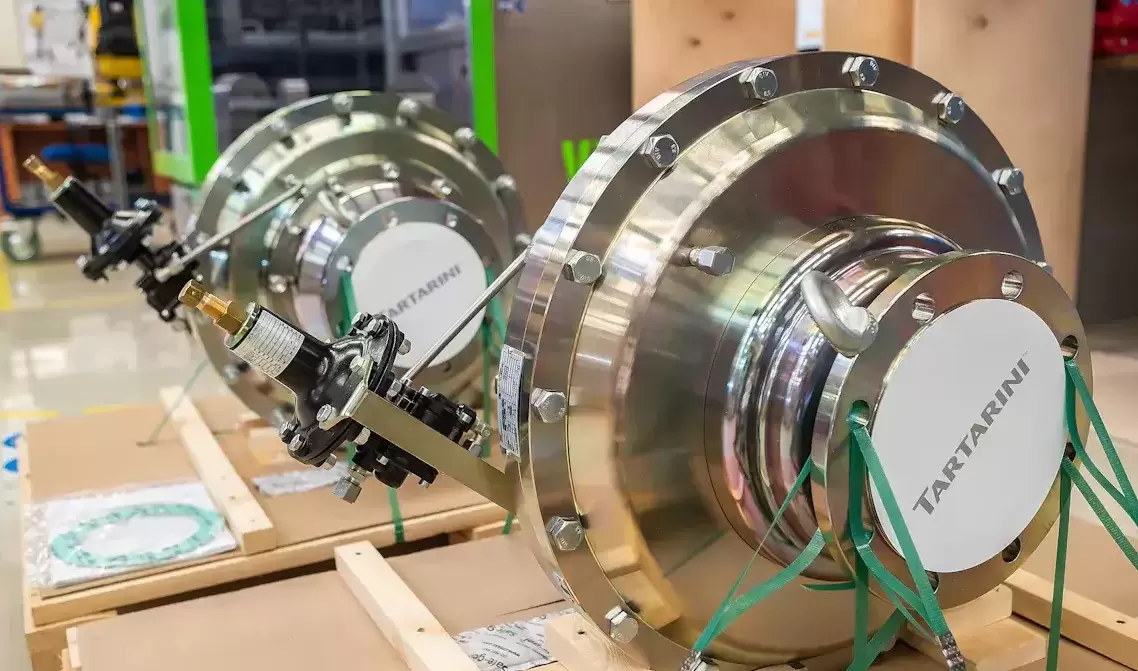
In heavy-duty engines—whether used in industrial machinery, marine propulsion, or high-displacement power systems—the flywheel is far more than a simple rotating component. It plays a critical role in stabilizing crankshaft motion, transmitting torque, and ensuring smooth engagement with clutch and starter systems.
Because of this, the manufacturing of engine flywheel components demands far more than standard machining. It requires a combination of advanced metallurgy, ultra-precise geometry control, surface engineering, and strict quality validation.
At Jiangxi Hongdu Preciosion Machinery, flywheel production is treated as a precision engineering process, with every stage carefully controlled to ensure long-term durability, accuracy, and reliability under extreme operating conditions.
1. Strong Foundations: Material Selection and Forging
Forged Alloy Steel for Maximum Strength
The process begins with high-strength forged alloy steel. Forging is not just about shaping—it fundamentally improves the internal structure of the material.
By applying high pressure during forming, the grain flow of the steel is aligned with the geometry of the flywheel. This results in:
- Improved fatigue resistance
- Higher impact strength
- Greater torsional load capacity
- Reduced internal defects such as porosity
Compared to cast components, forged flywheels offer significantly better mechanical performance and a longer service life—especially in applications involving continuous rotational stress.
Balancing Strength and Machinability
High-strength materials can be difficult to machine, so selecting the right alloy is critical. Jiangxi Hongdu Preciosion Machinery carefully balances mechanical strength with machinability to ensure:
- Stable cutting performance
- Longer tool life
- Minimal thermal distortion
- High dimensional stability during finishing
Controlled heat treatment processes are also applied to achieve uniform hardness without introducing internal stress.
2. Precision Engineering: The Central Tapered Bore
Why the Tapered Bore Matters
The central tapered bore is one of the most critical features of a flywheel. It must fit perfectly with a matching tapered sleeve to ensure secure torque transmission without slipping.
To guarantee performance:
- Contact between the bore and sleeve must exceed 80%
- Load is distributed evenly across the interface
- Micro-movement and wear are minimized
This level of precision is essential to prevent loosening, fretting, or long-term mechanical failure.
How It’s Achieved
Manufacturing this feature requires advanced processes such as:
- Multi-axis CNC machining
- Precision boring
- Fine grinding or honing
- Strict surface roughness control
All dimensions are verified using coordinate measuring machines (CMM) and high-precision gauges to ensure consistency—even under thermal expansion conditions.
3. Micron-Level Accuracy: Tolerances That Matter
Axial Tolerance: ±0.5 mm
Maintaining tight axial tolerances ensures proper positioning within the engine assembly. This helps prevent:
- Misalignment with clutch systems
- Starter engagement issues
- Excessive axial loads
Even small deviations can lead to uneven wear and reduced system efficiency.
Radial Runout: Less Than 0.01 mm
Radial runout is a key factor in rotational stability. Keeping it below 0.01 mm (10 microns) ensures:
- Smooth, concentric rotation
- Reduced vibration at high speeds
- Lower stress on bearings
- Extended crankshaft lifespan
This level of precision is achieved through high-accuracy machining, real-time measurement systems, and final inspection under controlled conditions.
4. Beyond Machining: Advanced Finishing Processes
Electro-Pulsed Plating Technology
Instead of relying on conventional coatings, advanced electro-pulsed plating is used to enhance surface performance. This process provides:
- Uniform coating thickness
- Strong adhesion
- Improved corrosion resistance
- Increased surface hardness
The result is a durable protective layer capable of withstanding oil exposure, humidity, and temperature fluctuations.
Dynamic Balancing
Every flywheel undergoes dynamic balancing to eliminate uneven mass distribution. This ensures:
- Smooth operation at high speeds
- Reduced vibration transmission
- Lower bearing stress
- Longer overall engine life
Balancing is performed according to international standards for high-speed rotating components.
Non-Destructive Testing (NDT)
To ensure structural integrity, each flywheel is subjected to non-destructive testing methods such as:
- Ultrasonic testing (UT)
- Magnetic particle inspection (MPI)
- Dye penetrant testing
These techniques detect internal defects or micro-cracks without damaging the component, ensuring only fully qualified parts move forward.
5. A Complete Quality Control System
Consistency in flywheel manufacturing relies on strict quality management at every stage, including:
- Raw material inspection
- Dimensional checks after machining
- Heat treatment verification
- Final geometric inspection
- Surface quality validation
- Dynamic balance certification
Jiangxi Hongdu Preciosion Machinery also implements full traceability systems, allowing each component to be tracked throughout its production lifecycle.
Final Thoughts
Manufacturing engine flywheels is a complex, multi-disciplinary process that combines metallurgy, precision machining, and advanced engineering techniques.
From forged materials with optimized grain structure to micron-level accuracy and advanced surface treatments, every detail contributes to performance, reliability, and longevity.
By maintaining strict technical standards and a precision-focused approach, Jiangxi Hongdu Preciosion Machinery delivers flywheel components that perform reliably under the most demanding conditions—making them a trusted partner in heavy-duty engine manufacturing.

 English
 French
 Spanish
 Portuguese
 Deutsch
 Turkish
 Dutch
Dutch
 Italiano
 Russian
 Romaian
 Portuguese (Brazil)
 Greek
Greek
 简体中文
简体中文
 日本語
日本語
 한국어
한국어
 繁体中文
繁体中文