In textile manufacturing, product quality isn’t just about appearance—it’s about performance and durability. One of the most important indicators of fabric strength is tear resistance, especially for materials used in garments, industrial textiles, and technical fabrics.
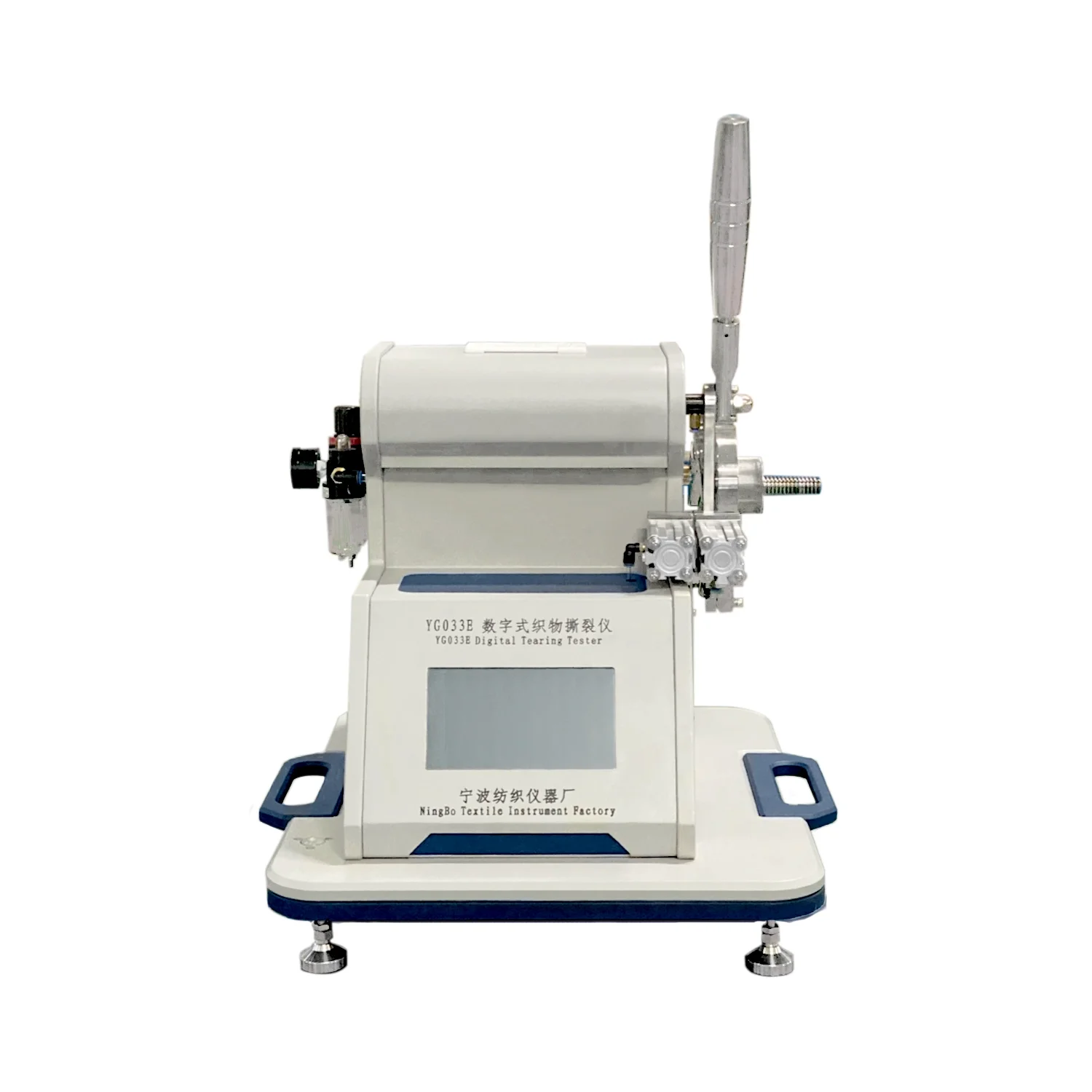
While traditional tear testers have long been part of quality control processes, newer intelligent fabric tear testers are changing the game. By integrating AI, automation, and data analysis, these advanced systems offer a more efficient and reliable way to evaluate fabric performance.
Why Tear Strength Testing Matters
Tear strength testing measures how well a fabric resists the propagation of a tear once it has started. This is critical for ensuring durability in real-world use.
Inconsistent or inaccurate testing can lead to:
- Premature product failure
- Increased material waste
- Reduced customer satisfaction
That’s why manufacturers are increasingly upgrading to smarter, more precise testing solutions.
User-Friendly Operation with Modern LCD Displays
One of the most noticeable improvements in intelligent fabric tear testers is the interface.
Older machines often relied on mechanical controls and hard-to-read dials. In contrast, modern systems use clear, intuitive LCD displays that make operation much easier.
Key advantages include:
- Simple navigation for setting test parameters
- Real-time monitoring of test progress
- Instant display of results
Many models also support multiple languages, making them accessible to operators in global manufacturing environments. This reduces training time and helps teams adopt the equipment quickly.
Automation for Accuracy and Consistency
A major upgrade in these systems is the use of advanced processing technology (sometimes referred to as integrated microprocessor control).
Instead of relying on manual calculations, the tester can:
- Automatically collect sensor data
- Process and calculate tear strength results
- Display outcomes instantly on-screen
This significantly reduces human error and ensures consistent test results across batches.
Beyond basic automation, some intelligent testers also analyze historical data. By applying data-driven algorithms, they can identify trends, detect anomalies, and even help predict fabric performance over time. This gives manufacturers a more proactive approach to quality control.
High Precision and Stable Performance
Accuracy is non-negotiable when it comes to testing equipment. Intelligent fabric tear testers are designed to deliver highly repeatable results.
This is achieved through:
- Precisely controlled force application during testing
- High-sensitivity sensors for accurate data capture
- Regular calibration to maintain performance
In addition, these machines are built for industrial environments. Their robust construction ensures long-term stability, even under continuous use.
For manufacturers, this means:
- Reliable data you can trust
- Lower maintenance requirements
- Longer equipment lifespan
The Bigger Picture: Smarter Quality Control
The real value of intelligent fabric tear testers goes beyond individual tests. By combining automation with data analysis, they help manufacturers move toward smarter, more efficient production systems.
Benefits include:
- Improved product consistency
- Reduced defect rates
- Better decision-making based on real data
- Lower overall production costs
Final Thoughts
The shift from traditional to intelligent fabric tear testing reflects a broader trend in the textile industry—moving toward automation, precision, and data-driven decision-making.
With features like user-friendly LCD interfaces, automated calculations, and advanced analytics, modern tear testers offer a clear advantage in both efficiency and accuracy.
Solutions from manufacturers such as Ningbo Textile Instrument Factory demonstrate how integrating AI and smart technologies can elevate standard testing processes into strategic quality control tools.
For textile producers aiming to improve durability, reduce waste, and stay competitive, upgrading to an intelligent fabric tear tester is not just a technical improvement—it’s a smart investment in long-term quality.



 English
 Arabic
 French
 Portuguese
 Deutsch
 Turkish
 Dutch
Dutch
 Italiano
 Russian
 Romaian
 Portuguese (Brazil)
 Greek
Greek
 简体中文
简体中文
 日本語
日本語
 한국어
한국어
 繁体中文
繁体中文