

From Molecules to Medicine: Advanced Nano Lipid Particle Systems
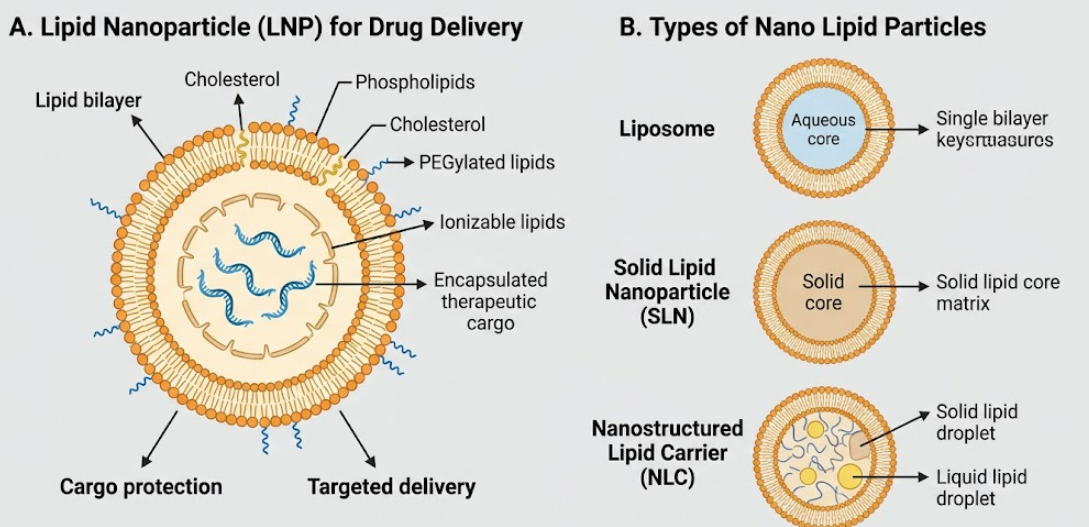
In today’s biotechnology and pharmaceutical landscape, nano lipid particles (LNPs) have become a cornerstone of next-generation drug delivery. From mRNA vaccines to gene editing platforms, these nanoscale carriers are transforming how therapeutic agents are transported and released at the cellular level.
As the industry shifts toward precision medicine, companies like XGen Bio are focusing on scalable, high-efficiency LNP systems that support both research and large-scale clinical applications.
What Are Nano Lipid Particles?
Nano lipid particles are lipid-based nanocarriers designed to encapsulate and deliver therapeutic payloads. Typically ranging from 1 to 100 nanometers, their small size enables efficient interaction with biological systems.
They are widely used to deliver:
- Nucleic acids (mRNA, siRNA, DNA)
- Proteins and peptides
- Small-molecule drugs
Their structure protects sensitive payloads from degradation while improving delivery efficiency inside the body.
How Do LNPs Work?
The effectiveness of LNPs lies in their ability to optimize delivery and targeting.
Key functional mechanisms include:
- Encapsulation: Protects therapeutic agents from enzymatic degradation
- Cellular uptake: Facilitates entry into target cells via endocytosis
- Surface modification: Enables targeting through ligand-receptor interactions
By adjusting lipid composition and surface characteristics, researchers can control:
- Circulation time in the bloodstream
- Stability under physiological conditions
- Target specificity for particular tissues or cells
This targeted delivery approach reduces off-target effects and improves overall therapeutic performance.
Major Applications of Nano Lipid Particles
1. Oncology (Cancer Therapy)
LNPs are increasingly used to deliver chemotherapeutic agents and RNA-based therapies directly to tumor cells. This targeted strategy helps:
- Improve drug concentration at the tumor site
- Reduce systemic toxicity
- Enhance treatment outcomes
XGen Bio is actively developing LNP formulations that support more effective and controlled cancer therapies.
2. Vaccines and Immunotherapy
LNPs have gained global attention due to their role in mRNA vaccine delivery. They:
- Protect mRNA from degradation
- Enable efficient cellular uptake
- Support strong immune responses
Their use in COVID-19 vaccines demonstrated how rapidly this technology can be applied to large-scale public health challenges.
3. Gene Therapy and Gene Editing
LNPs are also a key delivery system for gene therapies, including CRISPR/Cas9-based technologies. They enable:
- Safe delivery of genetic material
- Targeted modification of specific cells
- Potential treatment of genetic disorders and complex diseases
XGen Bio is exploring advanced LNP platforms to improve gene editing efficiency and delivery precision.
Advantages of Nano Lipid Particle Systems
Improved Bioavailability
LNPs enhance the stability and solubility of therapeutic compounds, especially those that are otherwise difficult to deliver.
Reduced Side Effects
Targeted delivery minimizes exposure to healthy tissues, helping reduce toxicity and unwanted reactions.
High Versatility
LNP systems can be adapted to carry a wide range of payloads, making them suitable for multiple therapeutic applications.
Why XGen Bio?
As a focused biotechnology company, XGen Bio provides integrated solutions for nano lipid particle development and production.
Their capabilities include:
- Custom LNP formulation design tailored to specific payloads
- Scalable manufacturing processes for clinical and commercial use
- Analytical characterization and quality control
- Support for mRNA, siRNA, and gene editing delivery systems
This end-to-end approach allows partners to move efficiently from early-stage research to clinical translation.
Conclusion
Nano lipid particles have become a key enabling technology in modern drug delivery, supporting breakthroughs in vaccines, oncology, and gene therapy. Their ability to combine protection, targeting, and delivery efficiency makes them highly valuable in developing advanced therapeutics.
As innovation continues, companies like XGen Bio are helping bridge the gap between laboratory research and real-world medical applications. With ongoing advancements in LNP design and scalability, these systems are expected to play an even greater role in shaping the future of precision medicine.
https://www.xgenbiologics.com/advanced-nano-lipid-particle-systems.html

 English
 Arabic
 French
 Spanish
 Portuguese
 Deutsch
 Turkish
 Dutch
Dutch
 Italiano
 Russian
 Romaian
 Portuguese (Brazil)
 Greek
Greek
 日本語
日本語
 한국어
한국어
 繁体中文
繁体中文