

Explosion-proof Pulse Valve Installation Taboos: Don't Make These 8 Mistakes
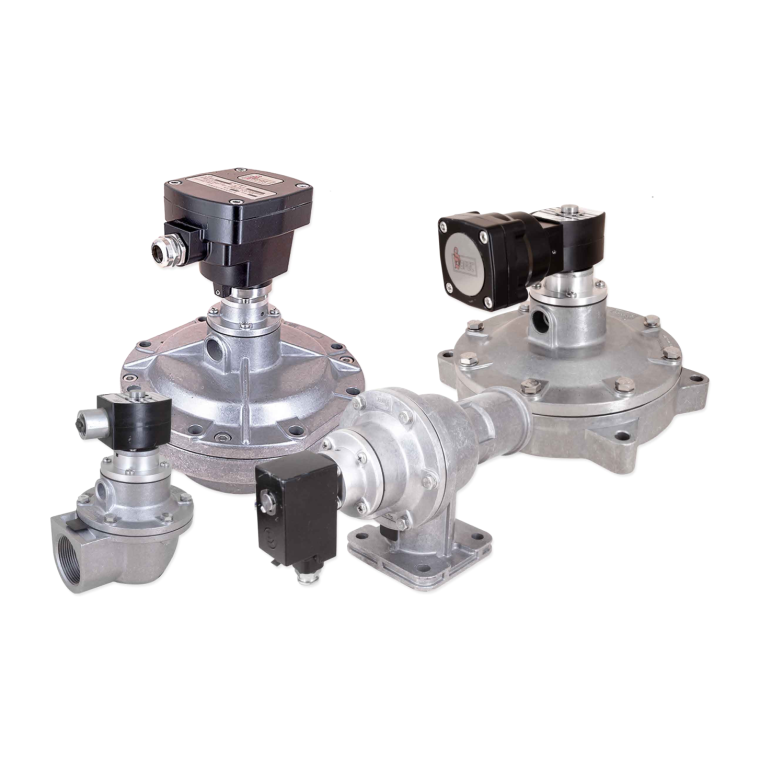
The explosion-proof Pulse Valve, as the core safety component of the explosion-proof dust removal system, its installation quality is directly related to the control effect of Explosion risks. The following are 8 absolutely prohibited incorrect operations during the installation process that need to be avoided as a priority:
Taboo 1: Damaging or contaminating the explosion-proof joint surface
Incorrect behavior: During installation, the explosion-proof mating surfaces between the valve body and the end cover, flange and other parts were not protected (such as scratches, collisions), or there were iron filings, oil stains, dust and other impurities remaining on the mating surfaces.
Consequence: The explosion-proof joint surface is a key barrier to prevent the internal explosion from spreading to the outside. Contamination or damage can lead to excessive gap and failure of flameproof performance. During an explosion, the flame may directly leak out, causing a secondary explosion.
Correct approach: Before installation, wipe the joint surface with a clean soft cloth to prevent scratches from tools. Regularly inspect the integrity of the joint surface to ensure there is no rust or deformation (gap ≤0.2mm, roughness Ra≤6.3μm).
Taboo 2: Poor sealing or the use of non-explosion-proof sealing materials
Incorrect behavior: When connecting the pulse valve to the jet pipe and the box body, the sealing gasket is wrongly selected (such as using ordinary rubber instead of explosion-proof and oil-resistant rubber), or the bolts are not evenly tightened diagonally, resulting in air leakage and powder leakage.
Consequence: The explosion pressure cannot be effectively released through the valve body, or dust leaks to the outside, creating an explosion hazard. Air leakage may also reduce the efficiency of the system's ash cleaning.
The correct approach: Select sealing materials that meet explosion-proof standards (such as fluororubber, metal wound gaskets), tighten the bolts diagonally and in batches during installation (with the torque meeting the standard), and test the airtightness with soapy water after installation.
Taboo 3: The electrical circuits are not explosion-proof sealed
Incorrect behavior: The lead-out wire of the electromagnetic coil of the Explosion-proof Pulse Valve is directly exposed or only wrapped with ordinary adhesive tape. It is not connected to the explosion-proof junction box as per the specifications. The circuit is not run through galvanized steel pipe or explosion-proof flexible pipe.
Consequence: High temperatures generated by external sparks or short circuits in the circuit may ignite explosive gases/dust, leading to secondary explosions. Non-explosion-proof junction boxes cannot prevent the spread of flames.
Correct practice: It is necessary to use a junction box that matches the explosion-proof grade of the valve body (such as Ex d IIB T4), pass the circuit through a metal conduit and fill it with explosion-proof sealing putty to ensure the sealing of the incoming line port.
Taboo 4: The installation direction should be opposite to the airflow marking
Incorrect behavior: Installation is not carried out in accordance with the airflow direction (arrow) marked on the valve body, and the air inlet and outlet are reversed.
Consequence: When the pulse valve operates, the airflow is disordered, the cleaning pressure is insufficient, and the filter bags cannot be effectively cleaned. In severe cases, it may cause an abnormal increase in the pressure inside the valve and damage the explosion-proof structure.
The correct approach: Before installation, check the valve body markings to ensure that the air inlet is connected to the compressed air source and the air outlet is connected to the blowpipe. The airflow direction should be consistent with the arrow.
Taboo 5: The fixed bracket is not firm or the vibration exceeds the standard
Incorrect behavior: Fixing the valve body only with a bolt on one side, or insufficient strength of the bracket, causing the valve body to loosen during operation due to pulsation of compressed air or vibration of the equipment.
Consequence: The displacement of the valve body may crack the seal, causing air leakage. Severe vibration may also cause the electromagnetic coil to loosen and the terminal block to short circuit, triggering electric sparks.
The correct approach: Use rigid brackets for fixation, with no less than 4 bolts and symmetrical fastening. In scenarios with significant vibration, shock-absorbing pads should be added, and the welds of the supports should be inspected regularly to ensure there are no cracks.
Taboo 6: Neglecting environmental adaptability protection
Incorrect behavior: In an environment with high humidity and corrosive dust (such as sulfides, chloride ions), the valve body shell is not treated for anti-corrosion (such as coating with epoxy resin), or the valve body is not made of stainless steel.
Consequence: Rust on the casing will damage the explosion-proof joint surface and sealing performance. Long-term corrosion may lead to a decrease in the strength of the valve body, making it unable to withstand pressure during an explosion.
The correct approach: Select the material based on the environment (such as 304 stainless steel), and spray an anti-corrosion coating on the surface. In damp environments, heating tapes or moisture-proof agents should be configured to prevent condensation inside.
Taboo 7: Insufficient safety distance from other devices
Incorrect behavior: The distance between the pulse valve and adjacent electrical equipment, pipelines or obstacles is less than the specification requirements (such as < 300mm from cable trays).
Consequence: The shock wave during the explosion may affect the surrounding equipment, triggering a chain of explosions. Insufficient maintenance space can also affect daily maintenance and troubleshooting.
The correct approach: In accordance with GB 50058 "Code for Design of Electrical Installations in Explosive Hazardous Areas", the distance between the valve body and the heat source should be no less than 1m, the distance from the cable no less than 500mm, and a maintenance passage of no less than 600mm should be reserved.
Taboo 8: Failure to conduct functional and explosion-proof tests after installation
Incorrect behavior: Putting into use merely after visual inspection without conducting air tightness tests, blow pressure tests or explosion-proof performance verifications (such as pressure resistance tests for flameproof enclosures).
Consequence: Hidden installation defects (such as micro-leakage at the seal and poor insulation of the coil) cannot be detected in time, and they may suddenly fail during operation, leading to explosion accidents.
Correct approach: After installation, the following must be conducted: ① Air tightness test (0.5MPa compressed air pressure maintained for 5 minutes, pressure drop ≤5%); ② Blow pressure test (action pressure meets the design value); ③ Re-inspection of explosion-proof certification (entrust a third party for testing if necessary).
Summary: The installation of the Explosion-proof Pulse Valve must strictly follow the design drawings and explosion-proof standards (such as GB 3836 series), with a focus on the integrity of the explosion-proof structure, sealing reliability and electrical safety. Every step of the operation should be "preventive" to avoid losing the big picture for small gains and ensure the intrinsic safety of the dust removal system.

 English
 Arabic
 French
 Spanish
 Portuguese
 Deutsch
 Turkish
 Dutch
Dutch
 Italiano
 Russian
 Romaian
 Portuguese (Brazil)
 Greek
Greek
 简体中文
简体中文
 日本語
日本語
 繁体中文
繁体中文