

How High-Precision Electronic Calipers Support CNC Manufacturing Efficiency
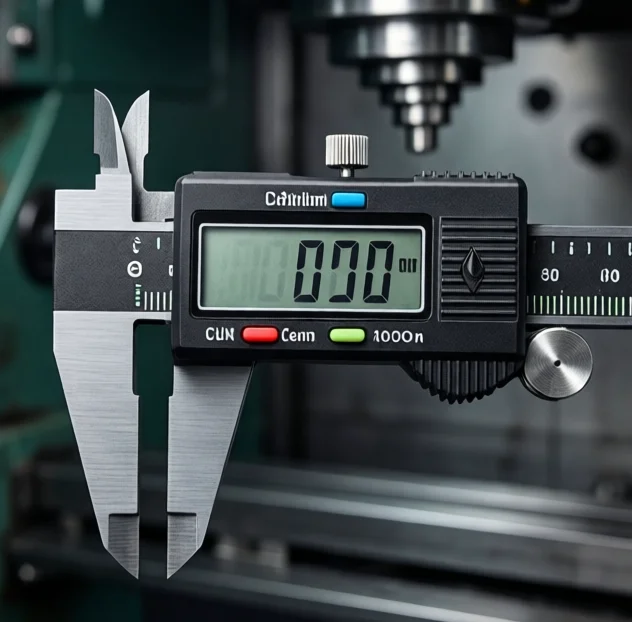
In modern CNC machining workshops, precision is not just a quality target—it is part of daily production survival. When machining tolerances are measured in microns and production schedules are tightly optimized, even small dimensional errors can lead to expensive rework, assembly issues, or complete part rejection.
For this reason, the role of the electronic caliper for CNC machine tools has changed significantly over the past few years. What was once considered a simple handheld measuring tool is now an important part of industrial quality control and smart manufacturing systems.
Today’s electronic calipers are expected not only to provide accurate measurement results, but also to survive harsh workshop conditions, support digital data transfer, and improve production efficiency.
CNC Workshop Conditions Require More Than Standard Digital Calipers
A standard consumer-grade digital caliper may work well in laboratory conditions, but CNC machining environments are completely different.
Inside a machining workshop, measuring tools are constantly exposed to:
- Coolant spray
- Metal chips
- Oil mist
- Dust particles
- Temperature fluctuations
Under these conditions, lower-quality calipers often experience unstable readings, display failures, or sensor interruptions.
This is why many manufacturers now prefer IP67 electronic calipers for CNC machine tools.
An IP67 protection rating helps prevent coolant and debris from entering the internal electronic system. More importantly, it improves long-term measurement stability during continuous industrial use.
For manufacturers such as West Lake Packaging Machinery, stable measurement tools are an important part of maintaining machining accuracy across high-volume equipment production.
Why Absolute Encoder Technology Matters
Older digital calipers typically required manual zero-setting each time the tool was powered on. In busy CNC production environments, this process increases the risk of incorrect measurement setup.
Modern professional electronic calipers often use absolute encoder technology.
This system allows the caliper to:
- Remember its measuring position
- Eliminate repeated zero-setting
- Reduce overspeed reading errors
- Improve inspection efficiency
For CNC operators checking parts during short machine pauses, fast and stable measurement response is extremely important.
This becomes especially useful when inspecting:
- Shaft diameters
- Bearing positions
- Precision grooves
- Aluminum components
- Stainless steel machined parts
in continuous production environments.
Structural Stability Directly Affects Measurement Accuracy
In precision machining inspection, sensor quality alone is not enough.
The mechanical structure of the caliper also influences measurement reliability.
When measuring large workpieces or deep component features, poor structural rigidity may cause:
- Jaw deflection
- Parallelism errors
- Inconsistent contact pressure
- False readings
Professional electronic calipers for CNC machine tools are usually designed with:
- Hardened stainless steel frames
- Precision-ground measuring jaws
- Improved structural rigidity
- Stable sliding systems
These features help minimize dimensional deviation during repetitive measurements.
At West Lake Packaging Machinery, dimensional consistency is especially important during the manufacturing of packaging equipment components, where shaft alignment and assembly precision directly influence machine operating stability.
Wireless Data Output Is Changing CNC Quality Control
One of the biggest changes in industrial metrology is the shift from manual inspection records to digital measurement management.
Traditional workflows often required operators to:
- Measure the component
- Read the display
- Write down the value manually
- Enter the data into a computer system later
This process is time-consuming and increases the possibility of human error.
Modern electronic calipers with SPC wireless data output simplify this process significantly.
Measurement results can be transferred directly to:
- Workstations
- Inspection software
- SPC systems
- ERP systems
- Centralized production databases
This creates a more efficient digital quality control workflow.
For CNC machining production, real-time data collection helps manufacturers monitor dimensional trends before tolerance problems become serious.
For example, if several measurements begin moving toward the upper tolerance limit, operators can adjust tool offsets early and avoid producing a large batch of non-conforming parts.
Reducing Rework and Improving Production Efficiency
The true value of professional electronic calipers is not limited to measurement accuracy alone.
In actual manufacturing operations, reliable inspection tools help reduce:
- Scrap rates
- Rework time
- Assembly corrections
- Machine downtime
- Production interruptions
In many CNC workshops, first-article inspection time can also be shortened when operators use faster and more stable digital measuring systems.
For equipment manufacturers like West Lake Packaging Machinery, reducing dimensional inconsistency between machined parts helps improve final machine assembly efficiency and long-term operating reliability.
When every machined component is verified accurately before assembly, the overall production process becomes more stable and predictable.
Calibration and Traceability Are Becoming More Important
In industrial B2B manufacturing, measurement traceability is increasingly important.
Industries such as:
- Aerospace
- Medical equipment
- Industrial automation
- Packaging machinery
- Precision engineering
often require documented calibration records for inspection tools.
Professional electronic calipers for CNC machine tools are commonly supplied with:
- Calibration certificates
- Accuracy verification records
- Traceable inspection standards
Many manufacturers now follow international calibration systems such as ISO/IEC 17025 to ensure inspection consistency.
Regular calibration also helps maintain long-term measurement reliability under continuous industrial use.
Electronic Calipers Are Becoming Part of Smart Manufacturing
As Industry 4.0 manufacturing continues to expand, inspection tools are becoming integrated into larger production management systems.
Electronic calipers are no longer isolated measuring devices. They are increasingly used as part of:
- Digital manufacturing systems
- Real-time quality monitoring
- Automated inspection workflows
- Smart factory management
This trend is especially visible in CNC machining environments where production speed and dimensional consistency must remain balanced.
For manufacturers focused on long-term process stability, investment in reliable metrology tools is becoming just as important as investment in machining equipment itself.
Conclusion
The modern electronic caliper for CNC machine tools is no longer just a simple handheld measuring device. It has become an important tool for maintaining machining accuracy, improving inspection efficiency, and supporting digital manufacturing systems.
Features such as:
- IP67 coolant protection
- Absolute encoder technology
- Wireless SPC data output
- High structural rigidity
- Calibration traceability
are helping manufacturers improve production stability while reducing quality risks.
At West Lake Packaging Machinery, precision measurement remains an important part of our manufacturing process. By combining reliable CNC machining with stable metrology systems, we continue working toward consistent equipment quality and long-term operational reliability for industrial production environments.

 English
 Arabic
 French
 Spanish
 Portuguese
 Deutsch
 Turkish
 Italiano
 Russian
 Romaian
 Portuguese (Brazil)
 Greek
Greek
 简体中文
简体中文
 日本語
日本語
 한국어
한국어
 繁体中文
繁体中文