

New Application Scenarios for the AS01 Adjuvant: The ACI-24.060 Alzheimer’s Disease Vaccine Project
The treatment of Alzheimer’s Disease (AD) has entered the era of "Disease-Modifying Therapies" (DMTs). With the approval of anti-Aβ monoclonal antibodies (such as Lecanemab), the Amyloid Cascade Hypothesis has received clinical validation. However, the safety risks associated with ARIA (Amyloid-Related Imaging Abnormalities) in monoclonal antibody therapies, as well as their high costs, remain major challenges.
In May 2024, AC Immune signed a global exclusive option and license agreement with Takeda Pharmaceutical, under which Takeda committed up to $2.1 billion to participate deeply in the ACI-24.060 project. This project leverages AC Immune’s proprietary SupraAntigen™ liposomal platform and innovatively employs Monophosphoryl Lipid A (MPLA—also known as 3D-MPLA) adjuvant technology—a technology that constitutes the core component of GSK’s AS01 adjuvant system. In the Phase 1b/2 ABATE clinical study, ACI-24.060 has already demonstrated excellent safety and immunogenicity; updated interim data are scheduled to be released in 2026, paving the way for advancement via an accelerated registration pathway.
As a potential "first-in-class" active immunotherapy, if successfully approved, this product promises to bring about a revolutionary transformation in the prevention and early intervention of AD and related neurodegenerative diseases. This article focuses on the backgrounds of the collaborating parties, the professional profiles of key personnel, the pathological basis of the project, and the innovative design of the product (specifically the application of liposomes and MPLA), while also offering an outlook on its clinical potential.
Company Backgrounds of the Collaborating Parties
AC Immune SA (Switzerland) is a clinical-stage precision medicine biopharmaceutical company founded in 2003 and headquartered in Lausanne. The company focuses on the diagnosis and treatment of neurodegenerative diseases—such as Alzheimer’s disease, Parkinson’s disease, and various rare indications. Its core technology platforms include SupraAntigen® (utilized for active immunotherapies) and Morphomer® (utilized for small-molecule therapeutics), through which it develops innovative therapies by targeting misfolded proteins (such as Aβ, Tau, and alpha-synuclein). The company has established strategic partnerships with global pharmaceutical leaders such as Janssen, Eli Lilly, and Takeda. Its pipeline spans the fields of active immunity, passive immunity, and small molecules, with a commitment to providing safe, durable, and accessible solutions for central nervous system (CNS) disorders.
Takeda Pharmaceutical Company Limited is a long-standing Japanese multinational pharmaceutical giant. Founded in 1781 and headquartered in Osaka, the company operates in over 70 countries and regions worldwide. Its product portfolio covers therapeutic areas including oncology, gastroenterology, neuroscience, rare diseases, plasma-derived therapies, and vaccines, with a particular focus on investing heavily in the development of innovative medicines within the neuroscience sector.
Takeda is renowned for its strategic partnership and licensing models, through which it collaborates with cutting-edge biotechnology firms to accelerate breakthroughs in the field of neurodegenerative diseases. Its current partnership with AC Immune represents a pivotal step in the strategic build-out of its neuroscience pipeline.
Key Personnel Background:
Christophe Weber, CEO of Takeda Pharmaceutical
Christophe Weber, President and CEO of Takeda Pharmaceutical, possesses extensive strategic experience in the fields of vaccines and adjuvants. He spent over 20 years at GlaxoSmithKline (GSK), where he held a succession of key leadership positions, including Chairman and CEO of GSK France, President and General Manager of GSK Vaccines, CEO of GSK Biologicals, and a member of the corporate executive team at headquarters.
From 2011 to 2014, while serving as GSK’s global head of vaccines, he personally spearheaded the critical Phase III trials (such as the ZOE-50/70 studies for Shingrix), regulatory submissions, manufacturing capacity expansion, and global commercialization strategies for AS01-adjuvanted vaccines.
Weber joined Takeda in 2014 as Chief Operating Officer (COO) and has served as CEO since 2015. The profound insights he gained during his tenure at GSK—regarding the commercial value, global deployment, and cross-regional collaboration potential of adjuvant platforms—have directly bolstered Takeda’s strategic positioning in the fields of immunology and neuroscience.
The current collaboration with AC Immune on the ACI-24.060 program serves as a strategic manifestation of his efforts to transplant the successful strategies employed in GSK’s vaccine division into the realm of active immunotherapy for neurodegenerative diseases. Although not the inventor of the adjuvant chemistry himself, as a high-level strategic architect, he possesses a deep understanding of how to transform established adjuvant technologies—such as MPLA—into blockbuster products.
I. Etiological Perspective: From Protein Accumulation to Immune Evasion
The core pathology of Alzheimer's disease involves the deposition of amyloid-beta (Aβ) plaques and the formation of neurofibrillary tangles composed of Tau protein within the brain. Among these pathological entities, pyroglutamate-modified Aβ (pGlu-Aβ) acts as a toxic "seed"; characterized by extreme hydrophobicity and a strong propensity for aggregation, it possesses the ability to evade clearance by the innate immune system.
Furthermore, Aβ exhibits prion-like templated propagation characteristics, gradually spreading from the entorhinal cortex to encompass the entire brain, ultimately leading to synaptic loss and neuronal dysfunction. While traditional passive immunotherapy can facilitate the clearance of Aβ, it frequently carries the risk of inducing Amyloid-Related Imaging Abnormalities (ARIA). In contrast, active immunotherapy—by inducing the body to continuously generate polyclonal antibodies—holds the promise of achieving a gentler and more sustained clearance of pathological aggregates.
II. The Innovative Design of ACI-24.060: The SupraAntigen™ Platform and the Application of Liposomes + MPLA
ACI-24.060 is not a traditional protein-based vaccine; rather, it constitutes a sophisticated, nanoscale active immunotherapy system. Its core principle lies in mimicking the structural organization of pathogens to precisely activate the humoral immune response.
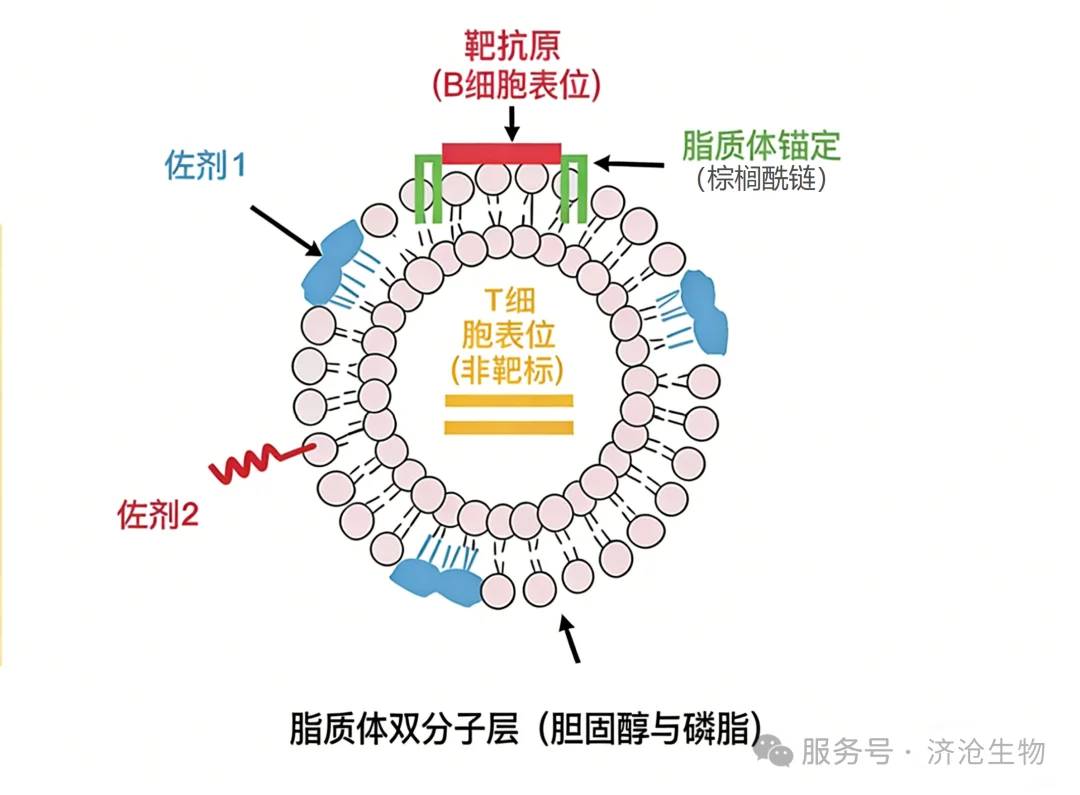
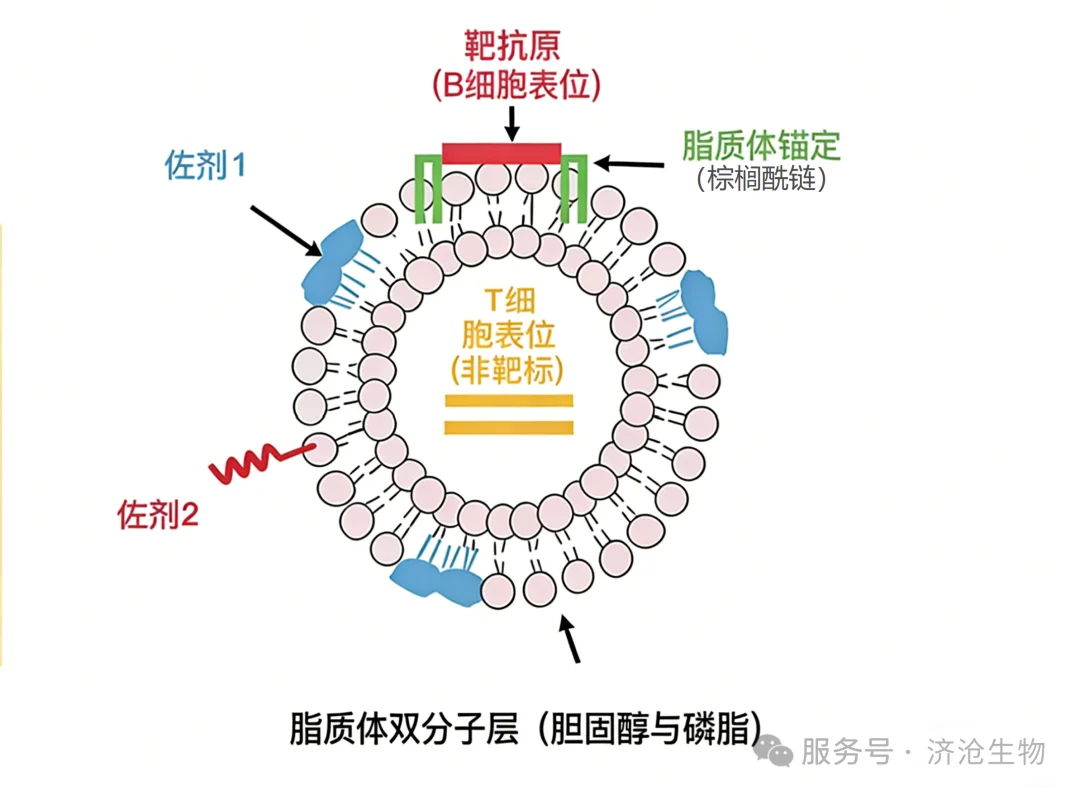
1. The Liposomal Bilayer: Mimicking the Highly Repetitive Antigen Presentation of Pathogens
The vaccine utilizes liposomes as delivery vehicles, anchoring Aβ peptide fragments (comprising 1–15 amino acids) onto the liposomal surface to form a highly repetitive array of antigens. This specific structural configuration enables the efficient cross-linking of B-cell receptors, thereby inducing a potent and durable antibody response while simultaneously avoiding excessive T-cell activation. Additionally, the liposomal carrier facilitates the presentation of antigens to dendritic cells and aids in the transport of antibodies across the blood-brain barrier, allowing them to exert their therapeutic effects within the cerebrospinal fluid (CSF).
2. The Core Adjuvant: MPLA (3D-MPLA)—An Innovative Adaptation of the AS01 Adjuvant System
MPLA serves as the "soul" adjuvant of ACI-24.060; it is also a critical component of GSK's AS01—a liposomal adjuvant system (comprising MPL and QS-21) utilized in blockbuster vaccines such as Shingrix. Its innovation lies in the precise integration of this well-established TLR4 agonist into the context of active immunization against neurological diseases:
-
Biological Origin and Low Toxicity: MPLA is derived from the lipopolysaccharide (LPS) of the Gram-negative bacterium Salmonella minnesota strain R595. It undergoes purification via acid hydrolysis to remove toxic components, resulting in a toxicity level that is merely one-thousandth that of natural LPS. Originally developed by Ribi ImmunoChem and subsequently commercialized by Corixa and GSK (as MPL®), it has emerged as the most extensively clinically validated TLR4 agonist available.
-
Immunological Bias: It specifically activates TLR4, thereby promoting dendritic cell maturation and a Th1-type immune response, and primarily inducing the production of IgG1 and IgG3 antibody subtypes. These antibodies exhibit high affinity for Fc receptors, enabling the efficient recruitment of microglia to phagocytose Aβ plaques while simultaneously avoiding the induction of an excessive pro-inflammatory cytokine storm.
-
Platform Adaptability: AC Immune has incorporated MPLA into a lipid bilayer structure, co-presenting it alongside Aβ peptides to create the "SupraAntigen® liposomal vaccine." Unlike the application of GSK’s AS01 adjuvant platform in viral vaccines, this innovative approach specifically targets pGlu-Aβ and oligomeric Aβ; by circumventing the need to cross the blood-brain barrier, it achieves precise immune modulation within the central nervous system.
This design endows ACI-24.060 with a dual profile of high immunogenicity (demonstrated by a 100% response rate, sustained high antibody titers, and positive antibody detection in cerebrospinal fluid) and excellent safety. While building upon the legacy of commercial success established by GSK’s adjuvant platform, it has been uniquely optimized to address the specific pathological mechanisms of Alzheimer’s disease (AD).
III. Clinical Trial Data: The ABATE Study (NCT05462106)
The Phase 1b/2 ABATE trial—which includes cohorts for both Alzheimer’s disease and Down syndrome—has demonstrated the breakthrough potential of ACI-24.060:
-
Safety: Across all dosage groups, the incidence of ARIA-E (cerebral edema) and ARIA-H (microhemorrhages) was zero. The endogenous antibody response elicited by the vaccine is milder than that induced by monoclonal antibody therapies, making it well-suited for long-term prophylactic use. • Immunogenicity: Induces high-titer polyclonal antibodies targeting pGlu-Aβ and its oligomers; by covering multiple epitopes, its clearance efficiency is theoretically superior to that of monoclonal antibodies.
-
Special Populations: In patients with Down syndrome (DS)—a group at high risk for AD due to the trisomy of the APP gene on chromosome 21—the immune response is consistent with that of the general population, providing a strong rationale for early-life intervention.
IV. Strategic Partnership Agreement
On May 13, 2024, AC Immune and Takeda signed a global exclusive option and licensing agreement. Under the terms, AC Immune received an upfront payment of $100 million. Should Takeda exercise its option, AC Immune stands to receive additional milestone payments tied to development, commercialization, and sales achievements, with a total potential value of approximately $2.1 billion. Furthermore, following commercialization, AC Immune is entitled to tiered, double-digit royalties on net sales. AC Immune is responsible for completing the ABATE trial, while Takeda will oversee subsequent development, CMC (Chemistry, Manufacturing, and Controls), regulatory affairs, and global commercialization. As of February 2026, the collaboration is progressing smoothly, and the funding secured ensures AC Immune’s cash runway extends through 2027.
V. Project Potential and Future Outlook
ACI-24.060 holds the potential to become a "first-in-class" product in the field of active immunotherapy for AD. Compared to monoclonal antibodies, it offers lower costs, less frequent dosing (requiring only a few vaccinations to maintain antibody levels for years), and a superior safety profile. Moreover, it enables early or preventive intervention—a particularly critical advantage for the DS population. Leveraging the precise modulation capabilities of MPLA (a core technology derived from AS01) in combination with liposomal nanodelivery, this platform can be expanded to target other neurodegenerative diseases, such as those involving Tau proteins or alpha-synuclein.
With the anticipated release of interim data from the ABATE trial in 2026—including results on PET plaque clearance and cognitive improvement—alongside the announcement of an accelerated registration pathway, successful regulatory approval could fundamentally transform the vision of a "world without Alzheimer's disease." Takeda’s global commercialization capabilities, combined with Dr. Weber’s extensive experience with GSK’s adjuvant technologies, will ensure that this innovation successfully transitions from the Swiss laboratory to patients worldwide.
VI. Conclusion
From the early setbacks faced by Wyeth and Pfizer to the revolutionary liposome-plus-MPLA approach pioneered by AC Immune and Takeda with ACI-24.060, the field of AD vaccine development has matured significantly over the past two decades. This project not only validates the latest applications of MPLA/AS01 adjuvant technology within the field of neuroimmunology, but also underscores the immense power of precision medicine and strategic collaboration. We are closer than ever to achieving the ultimate goal of conquering Alzheimer's disease.

 English
 Arabic
 French
 Spanish
 Portuguese
 Deutsch
 Turkish
 Dutch
Dutch
 Russian
 Romaian
 Portuguese (Brazil)
 Greek
Greek
 简体中文
简体中文
 日本語
日本語
 한국어
한국어
 繁体中文
繁体中文