

High-Efficiency Forming: The Key to Forming Machine Parts Manufacturing
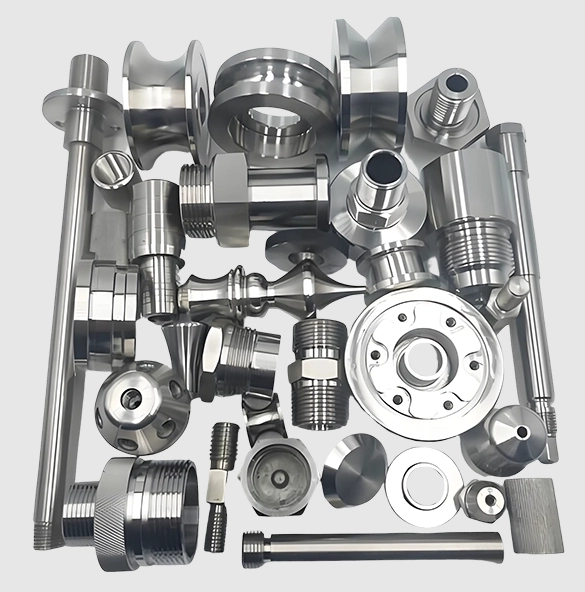
In modern industrial manufacturing, metal forming processes are at the core of mass production systems. From automotive body panels to aerospace structural components and heavy machinery parts, nearly every metal product begins its life shaped by forming equipment. Behind the stability, accuracy, and productivity of these machines lies one critical foundation: forming machine parts.
As production lines evolve toward higher speed, tighter tolerances, and longer continuous operation cycles, demand is increasing for high-precision forming machine parts for industrial press systems, wear-resistant forming machine components for heavy-load stamping operations, and customized forming machine spare parts for automated production lines.
Hongli Technology specializes in the engineering and manufacturing of durable, precision-controlled forming machine components designed to maintain stability under demanding industrial conditions.


The Real Function of Forming Machine Parts in Industry
A forming machine is not a single mechanism—it is a tightly coordinated system of mechanical, hydraulic, and structural components working under extreme pressure. Every cycle depends on the performance of its internal parts.
Key forming machine parts used in metal shaping systems typically include:
● drive transmission components
● guiding and alignment systems
● press and frame structures
● die and mold assemblies
● hydraulic and pneumatic elements
● fastening and support units
Each element contributes to force transmission, motion accuracy, and structural stability.
When one part fails or loses precision, the entire system is affected—resulting in dimensional errors, surface defects, or machine downtime.
Why Precision Matters in Forming Machine Components
Modern manufacturing tolerances are extremely strict. Even a deviation of microns can affect final product quality. That is why precision forming machine parts for high-performance industrial equipment are essential.
Key performance expectations include:
● stable dimensional accuracy under load
● minimal deformation during continuous operation
● precise alignment across moving assemblies
● reduced vibration and mechanical stress
● consistent force distribution
These factors directly influence product quality and production efficiency.
Material Engineering Behind High-Quality Forming Machine Parts
Material selection defines how well a forming machine component performs under pressure, heat, and repeated mechanical stress.
◆ Common Industrial Materials
● Alloy Tool Steel
Used in high-strength forming machine components for press systems, offering a balance of hardness and toughness.
● Hardened Structural Steel
Provides resistance against deformation in high-load environments.
● Cast Iron
Widely used for machine frames due to excellent vibration absorption and structural stability.
● High-Performance Alloy Materials
Applied in advanced systems requiring superior fatigue resistance and thermal stability.
Wear Resistance: A Critical Factor in Industrial Production
Forming machines operate under continuous stress cycles, making wear resistance one of the most important performance indicators.
Typical wear mechanisms include:
● surface abrasion from friction
● fatigue cracking from repeated loading
● thermal deformation under heat buildup
● edge degradation in moving assemblies
To address these challenges, manufacturers use wear-resistant forming machine parts for continuous production environments, enhanced through:
● heat treatment processes
● precision surface grinding
● advanced coating technologies
● optimized lubrication systems
These improvements significantly extend operational lifespan and reduce maintenance frequency.
Key Categories of Forming Machine Parts
A forming machine consists of multiple interdependent systems. Each category plays a specific role in production performance.
1. Mechanical Drive Systems
Responsible for transmitting energy and motion across the machine.
2. Guiding Systems
Ensure stable linear movement and precise alignment during operation.
3. Mold and Die Systems
Directly determine the final shape, accuracy, and surface quality of the product.
4. Hydraulic Systems
Provide controlled force for heavy-duty forming operations.
5. Structural Frames
Maintain machine stability and absorb operational vibration.
Together, these systems form the backbone of industrial forming machine parts for automated manufacturing systems.


Industrial Applications of Forming Machine Parts
Forming machine components are widely used across global manufacturing industries.
◆ Automotive Industry
Used for stamping body panels, chassis components, and structural reinforcements.
◆ Aerospace Industry
Requires ultra-precise components capable of maintaining stability under extreme forming pressure.
◆ Construction Equipment Manufacturing
Supports production of large-scale structural and load-bearing components.
◆ Electronics and Appliance Industry
Used for producing precision housings, brackets, and metal enclosures.
Across all sectors, high-precision forming machine parts for industrial production systems ensure consistent quality and efficiency.
Maintenance and Operational Stability
Even the most advanced forming machine components require proper maintenance to maintain performance.
Essential maintenance practices include:
● regular lubrication of moving parts
● alignment calibration checks
● wear inspection of high-load components
● vibration monitoring
● timely replacement of critical parts
Proper maintenance not only extends machine life but also ensures consistent product quality and reduces unexpected downtime.
Engineering Value of High-Quality Forming Machine Parts
In industrial production, forming machine parts are not simply mechanical accessories—they are performance-critical components that directly affect productivity.
High-quality parts deliver:
● improved forming accuracy
● reduced scrap rates
● higher production efficiency
● lower maintenance costs
● longer machine lifespan
This is why manufacturers increasingly choose custom forming machine parts for high-efficiency production systems rather than relying on generic alternatives.
Why Hongli Technology Is a Trusted Partner
As global manufacturing demands become more complex, reliability and precision in machine components are essential.
Hongli Technology focuses on producing precision forming machine parts for industrial applications, engineered for long-term stability and high-load performance.
Core advantages include:
● advanced precision machining capability
● strict dimensional quality control
● high-strength material processing expertise
● stable performance under continuous operation
● customized engineering solutions
● compatibility with automated production systems
From standard machine components to tailored industrial solutions, Hongli Technology supports manufacturers with dependable and durable forming system parts.
FAQ: Forming Machine Parts
1. What are forming machine parts used for?
They are used in metal forming equipment to support stamping, pressing, bending, and shaping operations in industrial manufacturing.
2. What affects the lifespan of forming machine parts?
Material quality, load intensity, lubrication, alignment accuracy, and maintenance frequency all directly influence durability.
3. Why is precision important in forming machine components?
Precision ensures stable force distribution, accurate shaping, reduced defects, and consistent production quality.
4. How often should forming machine parts be maintained?
It depends on usage intensity, but regular inspection and lubrication are typically required in high-speed production environments.
5. Why choose custom forming machine parts instead of standard ones?
Custom parts are designed for specific machine conditions, offering better compatibility, performance, and operational efficiency.
Conclusion
Forming machine parts are the structural and functional foundation of modern metal forming systems. Their precision, durability, and stability directly determine manufacturing efficiency and product quality.
With continuous advancements in material science and precision engineering, modern components are achieving higher levels of performance and reliability than ever before.
Hongli Technology remains committed to delivering high-quality forming machine parts designed for demanding industrial environments, supporting manufacturers in achieving stable, efficient, and scalable production.
https://www.honglitooling.com/news/the-key-to-forming-machine-parts-manufacturing.html

 English
 Arabic
 French
 Spanish
 Portuguese
 Deutsch
 Turkish
 Dutch
Dutch
 Italiano
 Russian
 Romaian
 Greek
Greek
 简体中文
简体中文
 日本語
日本語
 한국어
한국어
 繁体中文
繁体中文