

Intelligent Crane Automation: The Growing Role of Automated Control Cabinets
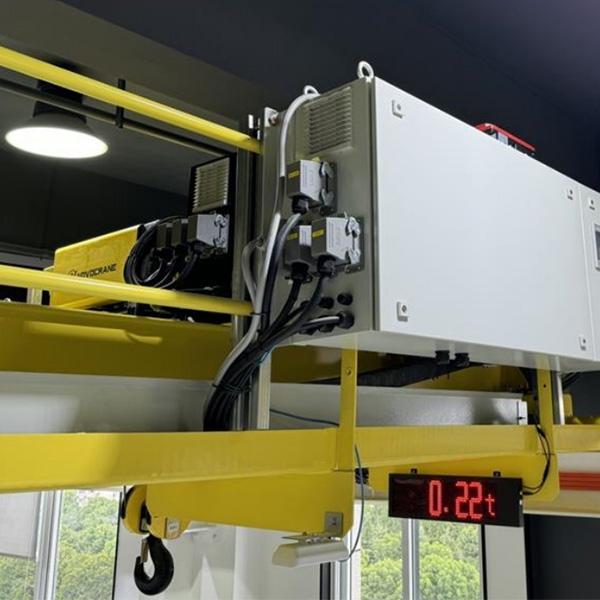
Modern industrial facilities are operating in an environment where efficiency, safety, and precision are no longer optional—they are essential performance requirements. As production systems become more complex and increasingly dependent on automation, traditional crane control methods are gradually revealing their limitations. Many older systems still rely on manual operation, basic relay logic, and fragmented electrical architectures, which often lead to inconsistent performance, higher maintenance costs, and reduced operational safety.
In response to these challenges, the automated crane control cabinet has emerged as a core component in modern lifting and material handling systems. It is no longer just an electrical enclosure but a centralized control intelligence that defines how a crane behaves, responds, and integrates into a broader industrial environment.
What an Automated Crane Control Cabinet Actually Does
At its core, an automated crane control cabinet serves as the central nervous system of a crane system. It manages all critical motion and safety functions, ensuring that every operation is executed in a controlled and coordinated manner.
Instead of relying on scattered electrical components, modern systems integrate all key functions into a unified platform, including hoisting control, trolley movement, bridge travel, load positioning, and system safety logic.
More importantly, it also enables communication between different subsystems, allowing cranes to operate as part of a larger automated production network rather than as isolated machines.
Core Technologies Inside the System
A modern crane automation control cabinet typically integrates several key technologies that work together to ensure performance and reliability.
The PLC (Programmable Logic Controller) acts as the brain of the system. It manages operational logic, processes sensor inputs, executes safety commands, and coordinates movement across different crane axes. Compared to traditional relay-based systems, PLC control provides significantly higher flexibility, stability, and diagnostic capability.
Variable frequency drives (VFDs) play another critical role. By controlling motor speed in real time, they allow cranes to accelerate and decelerate smoothly, reducing mechanical shock and improving positioning accuracy. This not only enhances operational precision but also reduces wear on mechanical components such as motors, gearboxes, and wire ropes.
Safety is another fundamental layer of the system. Modern control cabinets integrate multiple protection mechanisms such as overload detection, emergency shutdown circuits, limit switch monitoring, phase protection, and anti-collision logic. These systems continuously monitor operating conditions and intervene automatically when abnormal behavior is detected.
To further improve usability, human-machine interfaces (HMI) are commonly included. These touchscreen-based systems allow operators to monitor real-time status, review alarms, access fault codes, and track maintenance schedules. This significantly improves transparency and simplifies daily operation management.
Why Automated Crane Control Cabinets Are Becoming Essential
The shift toward automation in crane systems is not just a technological upgrade—it is a response to real operational demands.
One of the most important advantages is improved movement precision. Traditional cranes often suffer from abrupt starts, unstable load swings, and positioning inconsistencies. With automated control systems, motion is carefully regulated, allowing smoother transitions and more accurate load placement.
This level of precision is particularly important in industries such as steel manufacturing, automotive assembly, aerospace production, and logistics operations, where even minor positioning errors can lead to delays or material damage.
Safety is another major driving factor. Automated systems are designed to continuously monitor operational conditions and respond instantly to abnormal situations. Instead of relying solely on operator reaction, the system can automatically limit movement, trigger alarms, or shut down operations when necessary. This significantly reduces the risk of accidents caused by human error.
Equipment longevity is also improved. By reducing sudden mechanical stress through controlled acceleration and deceleration, key components experience less wear over time. This results in lower maintenance frequency, reduced spare part consumption, and fewer unexpected breakdowns.
In addition, energy efficiency has become an increasingly important consideration. Through intelligent motor control and load-based power adjustment, VFD-based systems reduce unnecessary energy consumption during crane operation. This aligns well with modern industrial goals focused on sustainability and cost reduction.
Industrial Applications Across Key Sectors
The use of automated crane control cabinets spans a wide range of industries.
In steel and metallurgical environments, cranes must operate under continuous high-load conditions. Automation ensures stable performance even in harsh operational settings.
In ports and logistics hubs, efficiency and speed are critical. Automated crane systems improve container handling accuracy, reduce turnaround time, and optimize yard operations.
Manufacturing facilities benefit from synchronized crane movement integrated into broader production systems, supporting smooth material flow between different production stages.
In modern warehousing systems, especially high-density storage environments, automated cranes enable precise retrieval and placement of goods, often integrated directly with inventory management systems.
Goldcrane’s Engineering Approach to Crane Control Systems
Within this evolving industrial landscape, Goldcrane focuses on developing automated crane control cabinet solutions that combine reliability, flexibility, and intelligent design.
Rather than offering a one-size-fits-all product, the company designs control systems based on real operational requirements, taking into account crane capacity, working environment, voltage specifications, and application scenarios.
Goldcrane systems are built around PLC-based architecture for stable logic control and long-term reliability. Industrial-grade electrical components are selected to ensure performance under demanding conditions. In addition, the systems are designed to support remote monitoring and industrial communication protocols, enabling integration into modern smart factory environments.
Safety remains a core design principle, with multiple protection layers embedded into every system. Combined with energy-efficient drive technology, these control cabinets help customers achieve both operational stability and reduced energy consumption.
The Future of Crane Control Systems
As industrial automation continues to evolve, crane systems are becoming increasingly intelligent. Future developments are expected to include deeper integration with IoT platforms, predictive maintenance capabilities, AI-based load optimization, and fully networked control environments.
In this context, the automated crane control cabinet is no longer just an accessory—it is becoming a foundational element of smart material handling systems.
Conclusion
The transformation from traditional crane operation to fully automated control systems represents a major shift in industrial engineering. Automated crane control cabinets play a central role in this transition by enabling precise motion control, improving safety performance, reducing mechanical wear, and enhancing energy efficiency.
As industries continue to move toward smarter, more connected production environments, solutions like those developed by Goldcrane are helping redefine what modern material handling systems can achieve—combining reliability, intelligence, and efficiency in a single integrated control platform.
https://www.goldcraneglobal.com/the-growing-role-of-automated-control-cabinets.html

 English
 Arabic
 French
 Spanish
 Portuguese
 Deutsch
 Turkish
 Dutch
Dutch
 Italiano
 Russian
 Romaian
 Portuguese (Brazil)
 Greek
Greek
 简体中文
简体中文
 日本語
日本語
 繁体中文
繁体中文