

Why Researchers Are Choosing INano™ S Microfluidic Equipment for Controlled Nanoformulation
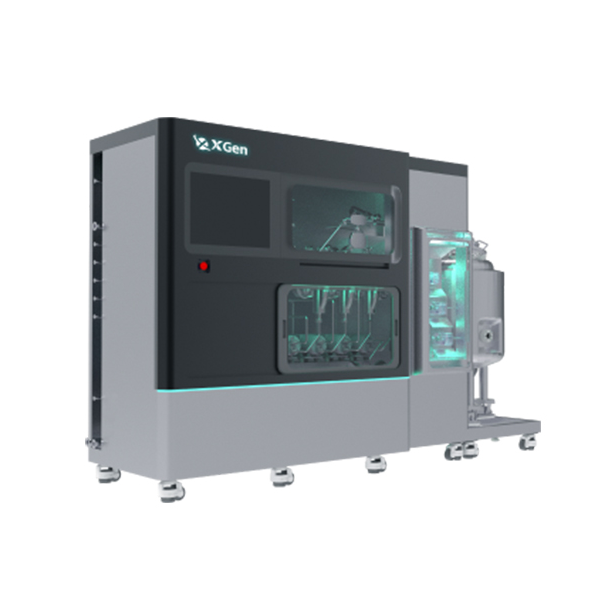
The rapid advancement of genetic medicines—particularly mRNA vaccines, siRNA therapeutics, and next-generation nucleic acid delivery systems—has exposed a persistent and critical manufacturing bottleneck: the reproducible and scalable formulation of lipid nanoparticles (LNPs).
While conventional mixing approaches may be adequate for early-stage laboratory exploration, they struggle to meet the strict demands of industrial production, where batch-to-batch consistency, particle uniformity, and regulatory-grade quality control are non-negotiable.
To address this gap between laboratory feasibility and commercial manufacturing, the industry is increasingly adopting microfluidic-based solutions. Among these, the INano™ S Microfluidic Equipment developed by XGen Bio stands out as a purpose-built platform designed to deliver both high precision and scalable throughput in LNP production.
Reframing LNP Formulation: From Turbulence to Controlled Microfluidics
Traditional LNP formulation techniques—such as T-junction mixing or turbulent impingement—depend on high-energy collisions between aqueous and solvent phases. While these methods can produce nanoparticles, the underlying process is inherently chaotic.
This turbulence-driven environment often leads to:
- Broad particle size distributions
- High polydispersity index (PDI) values
- Inconsistent encapsulation efficiency
- Poor reproducibility across batches
In contrast, microfluidic LNP formulation systems operate under laminar flow conditions, where fluids move in highly controlled streams. Mixing occurs primarily through predictable molecular diffusion rather than chaotic turbulence.
The INano™ S Microfluidic Equipment leverages precisely engineered microchannel geometries to control this process at the microscale. By accurately regulating key parameters such as:
- Flow Rate Ratio (FRR)
- Total Flow Rate (TFR)
- Solvent-to-buffer composition
the system ensures that every formulation experiences identical and reproducible mixing conditions.
The result is highly uniform LNPs with tightly controlled size distribution and significantly improved batch consistency—both essential for clinical and commercial applications.
Solving the Scale-Up Problem: Parallelization Over Enlargement
One of the most significant challenges in LNP manufacturing is scaling up without altering particle characteristics. A formulation that performs well at small laboratory volumes often behaves unpredictably when transferred to industrial-scale equipment.
The INano™ S addresses this issue through a fundamentally different engineering strategy: scale-up through parallelization rather than geometric enlargement.
Instead of increasing channel size—which would disrupt laminar flow behavior—the system replicates optimized microchannels in parallel configurations. This ensures that:
- Flow dynamics remain unchanged
- Mixing time remains consistent
- Particle formation mechanisms are preserved
This approach allows researchers to transition from development-scale conditions to production-scale output while maintaining identical formulation parameters.
In practical terms, processes optimized at small volumes can be reliably scaled to high-throughput production levels (exceeding 10 L/hour) without compromising particle integrity.
This capability is particularly valuable for engineers searching for commercial-scale LNP manufacturing systems that preserve laboratory-validated performance.
Enhancing Encapsulation Efficiency for Genetic Payload Delivery
For high-value nucleic acid therapies—such as self-amplifying RNA (saRNA), mRNA constructs, and DNA plasmids—encapsulation efficiency (EE%) is a critical performance metric. Low efficiency not only increases production costs but can also reduce therapeutic effectiveness.
The INano™ S Microfluidic Equipment is designed to maximize encapsulation efficiency by optimizing the timing and homogeneity of lipid-nucleic acid interactions.
During the microfluidic mixing process:
- Ionizable or cationic lipids rapidly self-assemble around nucleic acid payloads
- Nanoparticle formation occurs at the precise nucleation moment
- Uniform lipid layering prevents formation of empty vesicles
This controlled environment enables the system to consistently achieve encapsulation efficiencies above 90%, while also improving structural stability of the resulting nanoparticles.
Furthermore, the uniformity of the produced LNPs enhances downstream processing performance, including:
- Tangential flow filtration (TFF)
- Sterile filtration
- Long-term storage stability
A Critical Tool for Process Development and Optimization
Beyond production, the INano™ S serves as a powerful platform for process development (PD) and formulation optimization.
Its programmable interface allows researchers to systematically evaluate how variations in:
- Flow rate ratios
- Lipid concentration profiles
- Solvent composition
- Mixing parameters
affect final nanoparticle characteristics.
This enables high-resolution experimental mapping for formulation design, significantly accelerating the development cycle.
For scientists working on precision-controlled LNP preparation systems, the INano™ S provides a robust and reproducible environment that supports Quality by Design (QbD) methodologies.
Key advantages include:
- Automated experimental protocol execution
- Reduced operator-dependent variability
- Rapid iteration of formulation conditions
- High reproducibility across experiments
These capabilities make it particularly valuable in both academic research and industrial pharmaceutical development.
Engineering Consistency for Clinical-Grade Nanomedicine
The transition from experimental nanomedicine to clinically approved therapeutics depends heavily on reproducibility and scalability. Even minor variations in nanoparticle characteristics can significantly impact biological performance, biodistribution, and regulatory acceptance.
The INano™ S Microfluidic Equipment is engineered to eliminate these inconsistencies by ensuring:
- Uniform particle formation across batches
- Stable encapsulation performance
- Scalable and transferable process parameters
- Reduced variability in manufacturing conditions
By integrating precise microfluidic control with scalable architecture, XGen Bio provides a platform that aligns directly with regulatory expectations for process validation and quality assurance.
Conclusion: Bridging Innovation and Industrial Reality
The future of genetic medicine manufacturing depends not only on biological innovation but also on engineering precision. The challenge of producing lipid nanoparticles at scale—without compromising uniformity, efficiency, or stability—has long been a barrier to commercialization.
The INano™ S Microfluidic Equipment from XGen Bio directly addresses this challenge by combining:
- Controlled microfluidic laminar flow design
- Parallelized scale-up architecture
- High encapsulation efficiency performance
- Advanced process development capability
Together, these features transform LNP formulation from a variable laboratory process into a predictable, scalable manufacturing platform.
As genetic therapeutics continue to expand globally, systems like the INano™ S will play a pivotal role in translating scientific discovery into clinically viable, large-scale treatments—ensuring that consistency, scalability, and precision are no longer trade-offs, but standard outcomes.
https://www.xgenbiologics.com/why-researchers-are-choosing-inano-s-microfluidic-equipment.html

 English
 Arabic
 Spanish
 Portuguese
 Deutsch
 Turkish
 Dutch
Dutch
 Italiano
 Russian
 Romaian
 Portuguese (Brazil)
 Greek
Greek
 简体中文
简体中文
 日本語
日本語
 한국어
한국어
 繁体中文
繁体中文