

Why High-Performance Battery Welding Machines Matter in Lithium Battery Assembly
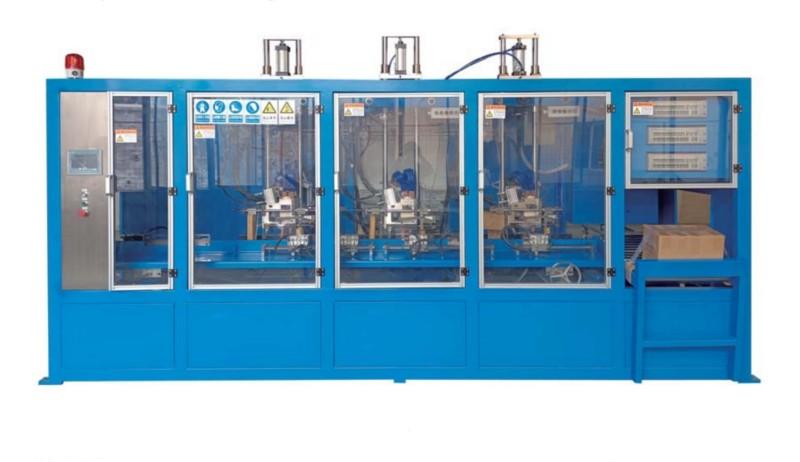
The rapid global expansion of electric vehicles (EVs), renewable energy storage systems, and smart electronic devices has fundamentally reshaped the battery manufacturing industry. As production volumes continue to rise, manufacturers are under increasing pressure to improve precision, efficiency, safety, and automation levels across every stage of battery assembly.
Among all manufacturing processes, battery welding technology has become one of the most critical determinants of final product performance and reliability.
This is why modern industrial buyers are increasingly searching for reliable battery welding machine manufacturers capable of delivering high-precision, stable, and scalable welding solutions. Companies such as Nexa Battery Technology are actively advancing welding automation systems to meet these evolving industrial demands.
The Critical Role of Welding in Lithium Battery Manufacturing
Battery welding is not a standard metal joining process. In lithium-ion battery production, it is a highly sensitive operation that directly affects both electrical performance and safety integrity.
Battery welding is widely applied in:
- Cylindrical battery assembly (e.g., 18650, 21700 cells)
- Prismatic battery manufacturing
- Pouch cell assembly
- Battery module construction
- EV battery pack integration
- Energy storage system production
Each welding point contributes to the overall electrical pathway of the battery system. Even minor defects can lead to serious performance issues.
Poor welding quality may result in:
- Increased internal resistance
- Reduced electrical conductivity
- Excess heat generation
- Structural instability
- Shortened cycle life
- Potential safety hazards
For this reason, precision welding is not optional—it is a core requirement in modern battery production.
Core Welding Technologies Used by Battery Welding Machine Manufacturers
Leading battery welding machine manufacturers rely on multiple advanced welding technologies, each suited to different production needs and material systems.
1. Laser Welding Technology
Laser welding has become the dominant solution in high-end battery manufacturing due to its precision and automation compatibility.
Key advantages include:
- Extremely high welding accuracy
- Minimal thermal distortion
- Fast processing speed
- Clean and consistent weld formation
- Excellent repeatability for mass production
Laser welding is widely used in:
- Busbar welding
- Battery tab welding
- Aluminum-to-copper connections
- EV battery module assembly
At Nexa Battery Technology, laser welding systems are continuously optimized to support high-throughput production while maintaining strict quality control standards.
2. Resistance Spot Welding
Resistance welding remains a widely adopted method, especially in cylindrical battery pack manufacturing.
It is commonly used for:
- Nickel strip welding
- Battery cell interconnection
- Small energy storage modules
Modern resistance welding systems focus on:
- Stable current output control
- Precise pressure regulation
- Real-time monitoring systems
- Automated defect detection
These improvements significantly enhance consistency in large-scale battery pack assembly.
3. Ultrasonic Welding Technology
Ultrasonic welding is increasingly used for sensitive and thin conductive materials where thermal impact must be minimized.
Key benefits include:
- Low heat generation
- High-speed welding cycles
- Strong conductive bonding
- Minimal material deformation
This method is especially suitable for:
- Thin copper and aluminum foils
- Micro battery connections
- Precision electronic battery assemblies
Automation: The Future Direction of Battery Welding Systems
As battery production scales globally, manual welding processes can no longer meet industrial requirements. Modern manufacturers now demand fully automated systems that ensure consistency and traceability.
Advanced battery welding machine manufacturers are integrating:
- Robotic welding arms
- Machine vision alignment systems
- AI-based defect detection
- MES production system integration
- Real-time process monitoring
Automation enables manufacturers to achieve:
- Higher production efficiency
- Lower defect rates
- Reduced labor dependency
- Improved process traceability
- Flexible production line adjustments
Nexa Battery Technology focuses heavily on intelligent automation to support high-volume battery production environments with stable and scalable welding performance.
Battery Welding and Safety Performance
In lithium battery systems, safety is directly influenced by welding quality. Poor welds can create unstable electrical pathways, increasing the risk of system failure.
Potential risks include:
- Localized overheating
- Electrical short circuits
- Resistance imbalance
- Thermal runaway conditions
To ensure safety, professional welding systems must provide:
- Precise energy control
- Accurate weld positioning
- Controlled penetration depth
- Minimal heat-affected zones
- Stable conductivity output
At Nexa Battery Technology, system design prioritizes reducing process variability while ensuring long-term operational safety of battery systems.
Key Application Areas of Battery Welding Machines
Electric Vehicle Battery Production
EV battery packs require thousands of welding points, each requiring consistent precision.
Welding systems must support:
- High-speed automated operation
- Multi-material compatibility
- Thermal management integration
- Large-scale production stability
Energy Storage Systems (ESS)
Large-scale storage systems depend on stable electrical connections for long-term high-current performance.
Precision welding improves:
- System durability
- Electrical efficiency
- Thermal stability
- Operational lifespan
Consumer Electronics Manufacturing
Compact devices require extremely fine welding accuracy for miniature battery assemblies.
Applications include:
- Smartphones
- Wearables
- Power tools
- Portable electronics
How to Choose a Reliable Battery Welding Machine Manufacturer
Selecting the right manufacturer is a strategic decision, not just a procurement choice. Industrial buyers should evaluate:
- Welding precision and repeatability
- Automation capability
- Machine stability and uptime
- Production scalability
- Customization options
- Technical support capability
- Industry application experience
- After-sales service quality
Manufacturers with strong engineering and R&D capabilities are better equipped to support future battery technology evolution.
Nexa Battery Technology positions itself as a provider of scalable welding solutions designed for both current production requirements and future industrial upgrades.
Conclusion
As the global energy transition accelerates, lithium battery manufacturing is becoming increasingly dependent on precision welding technology and intelligent automation systems.
Professional battery welding machine manufacturers play a critical role in ensuring:
- Stable production efficiency
- High welding accuracy
- Improved battery safety
- Scalable manufacturing capability
- Long-term product reliability
Through continuous innovation in laser welding systems, resistance welding technology, ultrasonic welding, and smart automation integration, Nexa Battery Technology is contributing to the development of next-generation battery manufacturing systems worldwide.
In a highly competitive and rapidly evolving industry, precision welding is no longer just a process—it is a foundation for battery performance, safety, and future innovation.

 English
 Arabic
 French
 Spanish
 Portuguese
 Deutsch
 Turkish
 Dutch
Dutch
 Italiano
 Russian
 Romaian
 Portuguese (Brazil)
 Greek
Greek
 日本語
日本語
 한국어
한국어
 繁体中文
繁体中文