

The Anatomy of Safe Driving: How Crescent Style Wireless Remote Controllers Streamline Car Audio Integration
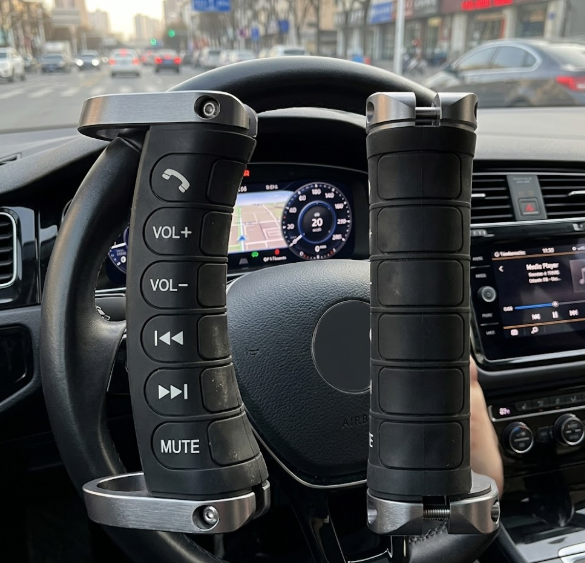
As vehicle infotainment systems become increasingly sophisticated, drivers are interacting with more digital features than ever before. Navigation apps, music streaming platforms, Bluetooth calling, and multimedia controls have all become standard components of the modern driving experience.
However, these conveniences introduce a new challenge: driver distraction.
Even a brief glance away from the road to adjust the volume or answer a phone call can reduce reaction time and increase safety risks. While many new vehicles come equipped with factory-installed steering wheel controls, millions of older cars, commercial vehicles, and entry-level electric vehicles still lack this functionality.
This is one of the key reasons why aftermarket wireless steering wheel remote controls are gaining popularity across global automotive markets.
Closing the Gap Between Legacy Vehicles and Smart Infotainment Systems
Many vehicle owners upgrade their factory radios with Android head units or advanced multimedia systems. Unfortunately, these upgrades often leave drivers without convenient access to essential controls while driving.
A universal wireless car steering wheel button remote control provides an effective solution by allowing drivers to operate audio and communication functions directly from the steering wheel.
Instead of reaching toward the dashboard, users can perform common tasks such as:
- Adjusting volume levels
- Switching music tracks
- Answering or rejecting phone calls
- Activating media functions
- Controlling navigation prompts
This significantly improves convenience while helping drivers keep their attention focused on the road.
The Technology Behind Responsive Wireless Steering Wheel Controls
Unlike conventional consumer electronics, automotive accessories must operate reliably under demanding conditions.
Vehicle interiors are exposed to:
- Constant vibration
- Rapid temperature changes
- Electrical fluctuations
- Electromagnetic interference (EMI)
- Long operating hours
To maintain stable performance, DongqixingTechnology has developed wireless steering wheel control systems that utilize optimized low-power RF communication technology.
The operation process is straightforward:
- The driver presses a button on the steering wheel controller.
- An encrypted wireless signal is transmitted instantly.
- The receiver module connected to the head unit decodes the signal.
- The infotainment system executes the command immediately.
This streamlined communication architecture minimizes latency and delivers a user experience similar to factory-installed steering wheel controls.
Three Design Options for Different Vehicle Applications
Not all drivers have the same installation requirements. To accommodate different vehicle types and user preferences, DongqixingTechnology offers several steering wheel control configurations.
1. Clip-On Steering Wheel Remote Control
For users seeking a quick and practical upgrade, the 6-key clip-on steering wheel remote control offers a simple installation solution.
The controller attaches directly to the steering wheel using a durable automotive-grade mounting structure, requiring no major modifications to the vehicle interior.
Its ergonomic button layout allows drivers to access frequently used multimedia functions with minimal hand movement, making operation intuitive and safe during daily driving.
Ideal applications include:
- Passenger cars
- Fleet vehicles
- Ride-sharing vehicles
- Delivery vehicles
2. Universal 12V–24V Compatibility for Diverse Vehicle Platforms
One of the biggest challenges in the automotive aftermarket is accommodating different vehicle electrical systems.
Most passenger vehicles operate on 12V systems, while trucks, commercial vehicles, buses, and certain electric platforms use 24V architectures.
The universal 12V-24V wireless steering wheel controller is designed to support both environments through an integrated voltage regulation system.
Key benefits include:
- Wider vehicle compatibility
- Simplified inventory management
- Reduced installation complexity
- Stable operation under varying electrical conditions
This flexibility makes the product particularly attractive for distributors, installers, and fleet operators serving multiple vehicle categories.
3. Crescent-Style Design for OEM-Like Appearance
Many vehicle owners want additional functionality without compromising cabin aesthetics.
The crescent-style wireless steering wheel control button was developed specifically for this purpose.
Its low-profile curved housing follows the natural contours of the steering wheel, allowing it to blend seamlessly into the vehicle interior.
When installed, the controller resembles an original factory component while providing convenient access to:
- Music playback controls
- Volume adjustment
- Call management
- Multimedia navigation
For users seeking both functionality and visual integration, this design offers an attractive solution.
Easy Integration with Android and Aftermarket Multimedia Systems
Compatibility is often a major concern when upgrading vehicle electronics.
Fortunately, modern wireless steering wheel controllers are designed to work with most infotainment systems that support Steering Wheel Control (SWC) learning functions.
The setup process is typically straightforward:
Step 1
Open the SWC or Steering Learning menu on the head unit.
Step 2
Press the desired button on the steering wheel controller.
Step 3
Assign the corresponding function on the touchscreen interface.
Step 4
Save the settings.
Once configured, the controller retains its programming through built-in memory, eliminating the need for repeated setup during routine vehicle maintenance or battery replacement.
This makes integration with Android head units and many aftermarket multimedia systems fast and user-friendly.
Why Automotive Businesses Are Adopting Wireless Steering Wheel Controls
From an industry perspective, demand for steering wheel control solutions continues to grow as vehicle owners seek safer and more convenient multimedia operation.
For automotive retailers, installers, and distributors, these products offer several advantages:
Enhanced Driving Safety
Hands remain on the steering wheel while essential functions are controlled.
Improved Customer Satisfaction
Users gain a more modern and connected driving experience.
Broad Market Compatibility
Suitable for passenger vehicles, commercial fleets, trucks, and EVs.
Straightforward Installation
Reduces labor time and simplifies deployment.
Strong Aftermarket Demand
Complements the growing market for Android and smart multimedia head units.
Final Thoughts
As vehicles become increasingly connected, steering wheel control functionality is no longer viewed as a premium luxury feature. Instead, it has become an important component of safe and efficient vehicle operation.
A well-designed wireless steering wheel remote control enables drivers to interact with multimedia systems more naturally while minimizing distractions behind the wheel.
With flexible mounting options, broad voltage compatibility, reliable RF communication, and support for a wide range of infotainment systems, DongqixingTechnology continues to provide practical solutions that help modernize both legacy vehicles and new transportation platforms.
For drivers, installers, and automotive businesses alike, wireless steering wheel controls represent a simple upgrade that delivers meaningful improvements in convenience, safety, and overall driving experience.

 English
 Arabic
 French
 Portuguese
 Deutsch
 Turkish
 Dutch
Dutch
 Italiano
 Russian
 Romaian
 Portuguese (Brazil)
 Greek
Greek
 简体中文
简体中文
 日本語
日本語
 한국어
한국어
 繁体中文
繁体中文