

Elevate Your Experiments with Contriu’s 2-Piece No Rubber Stopper Syringe
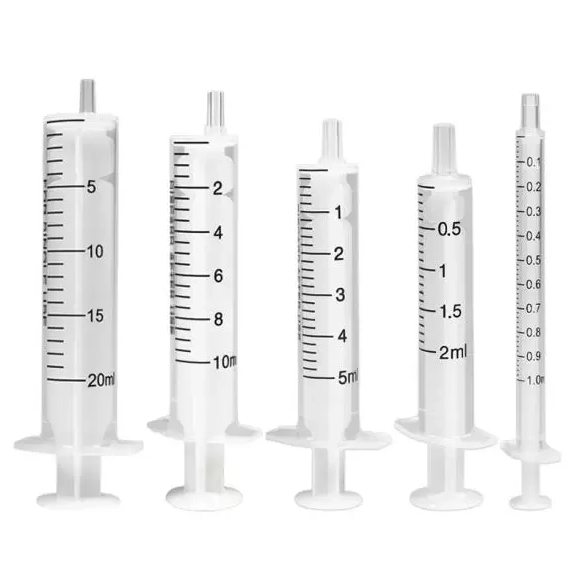
In analytical laboratories, accuracy is often determined by details that are easy to overlook. While sophisticated instruments such as High-Performance Liquid Chromatography (HPLC) systems receive much of the attention, consumables can have an equally significant impact on data quality.
One component that has gained increasing attention in recent years is the rubber-free HPLC syringe. As laboratories push for higher sensitivity, lower detection limits, and greater reproducibility, minimizing every possible source of contamination becomes essential.
This is where HPLC laboratory syringes without rubber components offer a clear advantage.
Why Traditional Syringes Can Create Analytical Challenges
Many conventional laboratory syringes rely on rubber plungers or rubber sealing elements to achieve smooth movement and leak resistance.
While suitable for general laboratory applications, rubber materials can introduce potential issues when working with highly sensitive analytical methods.
Common concerns include:
- Chemical extractables and leachables
- Solvent-induced swelling
- Particle generation
- Sample adsorption
- Potential chromatographic interference
In trace-level analysis, even minor contamination can affect peak shapes, baseline stability, and overall analytical reliability.
For laboratories working in regulated industries, these risks are often unacceptable.
What Is a Rubber-Free HPLC Syringe?
A rubber-free HPLC syringe is specifically designed to eliminate elastomer materials from the sample contact pathway.
Instead of relying on rubber stoppers or seals, these syringes use precision-engineered components that maintain smooth operation while minimizing contamination risks.
They are commonly used in applications requiring high-purity sample handling, including:
- Pharmaceutical analysis
- Biochemical research
- Environmental testing
- Food safety laboratories
- Chemical research and development
Because no rubber components come into contact with the sample, the risk of unwanted chemical interaction is significantly reduced.
Understanding the 1ml–20ml Two-Piece Syringe Design
One of the most practical configurations available today is the two-piece rubber-free syringe design, available in capacities ranging from 1ml to 20ml.
This design focuses on simplicity, reliability, and analytical precision.
Broad Capacity Range
Different laboratory workflows require different sample volumes.
Common applications include:
1ml–2ml Syringes
Ideal for micro-sample preparation and small-volume injections.
5ml–10ml Syringes
Frequently used in routine HPLC sample handling and laboratory preparation tasks.
20ml Syringes
Suitable for larger-volume transfer procedures and experimental workflows.
This flexibility allows laboratories to standardize consumables across multiple applications.
Simplified Two-Piece Construction
Compared with more complex syringe assemblies, the two-piece structure offers several benefits:
- Fewer components
- Reduced friction points
- Improved operational consistency
- Easier handling and maintenance
The streamlined design also helps reduce potential contamination sources.
Why Rubber-Free Designs Matter in HPLC Analysis
Improved Sample Purity
One of the primary reasons laboratories adopt rubber-free syringes is contamination control.
Organic solvents commonly used in HPLC, such as:
- Methanol
- Acetonitrile
- Acetone
- Various buffer systems
can interact with rubber materials over time.
These interactions may introduce unwanted compounds into the sample stream, potentially affecting analytical results.
By eliminating rubber entirely, laboratories gain greater confidence in sample integrity.
Better Reproducibility
Reproducibility is fundamental to any analytical method.
When syringe materials interact differently with samples from one run to the next, variations can appear in chromatographic results.
Rubber-free syringe systems help maintain:
- Consistent injection volumes
- Stable flow characteristics
- Reduced adsorption effects
- Improved repeatability
These factors contribute directly to more reliable analytical outcomes.
Superior Solvent Compatibility
Many aggressive solvents can cause traditional rubber components to deteriorate over time.
Rubber-free syringe designs provide enhanced resistance to chemical exposure, making them suitable for a broad range of laboratory environments.
This is particularly valuable in pharmaceutical development and advanced chemical research where solvent compatibility is critical.
Applications Across Multiple Industries
The demand for contamination-free sample handling extends far beyond HPLC laboratories.
Pharmaceutical Laboratories
Drug formulation analysis, impurity profiling, and quality control procedures require extremely high analytical precision.
Rubber-free syringes help ensure that test results reflect the sample itself rather than contamination from consumables.
Environmental Monitoring
Environmental laboratories frequently analyze trace-level contaminants in water, soil, and air samples.
Reducing background interference is essential for accurate detection and regulatory compliance.
Food and Beverage Testing
Food safety laboratories use analytical techniques to detect additives, preservatives, pesticide residues, and contaminants.
Material purity throughout the testing process helps improve confidence in results.
Research and Development
Chemical and biochemical research often involves sensitive compounds that may react with conventional syringe materials.
Rubber-free systems provide a more stable solution for handling reactive substances.
Why Manufacturing Precision Is Just as Important as Material Selection
Choosing a rubber-free syringe is only part of the equation.
Manufacturing quality also plays a major role in performance.
High-quality laboratory syringes require:
- Precise barrel dimensions
- Consistent plunger movement
- Controlled internal tolerances
- Reliable fluid displacement
Even small dimensional inconsistencies can affect dosing accuracy and injection repeatability.
This is why many laboratories evaluate not only syringe materials but also manufacturing standards when selecting analytical consumables.
Contriu’s Approach to High-Purity Laboratory Consumables
As laboratories continue to demand higher analytical performance, manufacturers are focusing more heavily on contamination control and precision engineering.
Contriu's rubber-free HPLC syringe series is designed around these principles, combining:
- High-purity sample handling
- Broad chemical compatibility
- Consistent fluid transfer
- Reliable manufacturing quality
Available in capacities ranging from 1ml to 20ml, these syringes are intended to support diverse analytical and experimental workflows while helping laboratories reduce contamination-related variables.
Final Thoughts
In modern analytical science, reliable results depend on controlling every aspect of the testing process—including the consumables used to handle samples.
Rubber-free HPLC syringes may seem like a small component, but they play a critical role in maintaining sample purity, improving reproducibility, and supporting accurate analytical measurements.
As laboratories continue to work with increasingly sensitive detection methods, the move toward contamination-free syringe systems is likely to accelerate.
For many analytical applications, choosing a high-quality rubber-free syringe is no longer simply a preference—it has become an important step toward achieving dependable and repeatable laboratory results.

 Arabic
 French
 Spanish
 Portuguese
 Deutsch
 Turkish
 Dutch
Dutch
 Italiano
 Russian
 Romaian
 Portuguese (Brazil)
 Greek
Greek
 简体中文
简体中文
 日本語
日本語
 한국어
한국어
 繁体中文
繁体中文