

Plug-and-Play Precision: UVC Webcams for Smart Inspection Systems
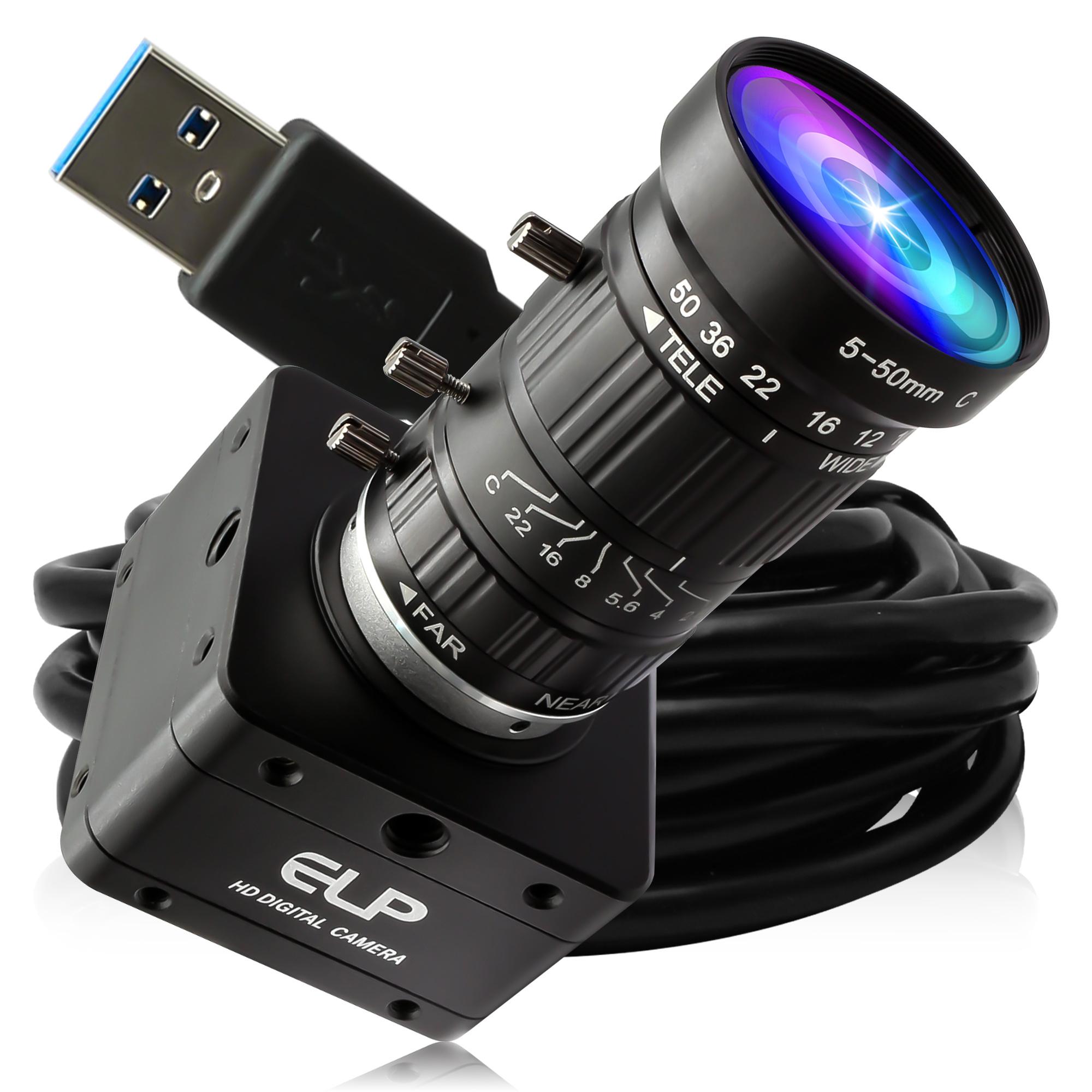
In the age of Industry 4.0, production lines are no longer simply mechanical systems—they are becoming fully data-driven ecosystems. Within this transformation, the “eyes” of automation systems have evolved from simple monitoring tools into critical sensing nodes responsible for real-time inspection, analysis, and decision-making.
As manufacturers move toward fully automated quality control, the need for flexible, driver-free, and high-performance imaging solutions has rapidly increased. The UVC Webcam for Inspection Automation has emerged as a practical and disruptive technology that bridges consumer-grade USB simplicity with industrial machine vision requirements.
At ELP, we design imaging systems with the understanding that industrial cameras are no longer just video devices—they are data acquisition sensors for intelligent automation environments.
🔍 Why UVC Standard Matters in Industrial Automation
One of the most significant challenges in industrial imaging deployment is software complexity.
Traditional machine vision cameras often require:
- Proprietary SDK installation
- Dedicated drivers
- Complex system configuration
- Long integration cycles
These constraints slow down deployment and increase maintenance overhead.
⚡ UVC Compliance: True Plug-and-Play Architecture
The ELP UVC Webcam for Inspection Automation is built on the Universal Video Class (UVC) standard, which allows the camera to be recognized instantly by operating systems without additional drivers.
This brings major advantages:
✔ Instant system recognition (plug-and-play)
✔ No proprietary driver dependency
✔ Reduced integration time
✔ Higher system stability
✔ Lower maintenance complexity
For industrial environments where uptime is critical, UVC compliance significantly reduces deployment friction.
Whether deployed on Windows-based QC stations or Linux-based embedded controllers, the system becomes operational within seconds.
🌐 Cross-Platform Compatibility for Modern Industrial Systems
Modern automation environments rarely rely on a single operating system. Instead, they combine multiple platforms across development, control, and monitoring layers.
The ELP Inspection Automation Webcam is engineered for full cross-platform flexibility.
It supports:
- Windows industrial PCs
- Linux-based control systems
- Mac OS development environments
- Android handheld diagnostic devices
- Raspberry Pi embedded systems
- Ubuntu-based automation frameworks
🧠 Why This Matters
This flexibility enables:
✔ Seamless R&D-to-production transition
✔ Unified hardware across platforms
✔ Reduced hardware replacement costs
✔ Faster prototyping for engineers
✔ Simplified system scaling
For robotics developers and automation engineers, the ability to deploy the same camera across different systems dramatically improves development efficiency.
📊 Imaging Performance: MJPEG vs YUY2 in Industrial Use
In automated inspection systems, image data is not just visual—it is computational input for algorithms.
Different encoding formats serve different engineering needs.
🎞 MJPEG Mode: High-Speed Transmission Efficiency
MJPEG compresses each frame individually, making it ideal for:
- High-speed conveyor belt monitoring
- Long-distance USB transmission
- Real-time surveillance systems
- Multi-camera deployment environments
Benefits include:
✔ Lower bandwidth usage
✔ Stable high-frame-rate output
✔ Efficient streaming over USB 3.0/2.0
✔ Reduced system load
🎯 YUY2 Mode: Precision-Grade Raw Imaging
YUY2 provides uncompressed or minimally processed image data, making it suitable for:
- Industrial metrology
- Biometric recognition systems
- High-precision inspection algorithms
- Color-sensitive defect detection
Benefits include:
✔ Higher pixel-level accuracy
✔ Better color fidelity
✔ More reliable OpenCV processing
✔ Improved measurement consistency
🧠 OpenCV and Machine Vision Integration
In modern industrial automation, cameras are no longer passive imaging devices—they are real-time computational sensors.
The ELP UVC Webcam for Inspection Automation integrates seamlessly with OpenCV and other computer vision frameworks.
This enables:
- Edge detection
- Object classification
- Defect recognition
- Motion tracking
- Automated optical inspection (AOI)
Because the camera operates using standard UVC protocols, engineers can directly integrate it into:
- Python-based AI pipelines
- C++ machine vision systems
- Java automation platforms
- Embedded Linux scripts
This reduces dependency on proprietary software stacks and accelerates system development.
⚙️ From Webcam to Industrial Sensor: A Functional Shift
Although the term “webcam” is often associated with consumer applications, in industrial environments the role is fundamentally different.
The ELP UVC camera functions as:
📡 A real-time data acquisition sensor
Instead of simply recording video, it feeds live data into AI and automation systems.
🤖 A machine vision input device
Used for decision-making in robotics and inspection systems.
🔄 A system integration component
Easily embedded into larger automation architectures.
🏭 Industrial Applications of ELP UVC Inspection Cameras
🏭 Factory Automation
Used for:
- Assembly line inspection
- Component verification
- Process monitoring
- Defect detection
🔐 Security Surveillance Systems
Applied in:
- Critical infrastructure monitoring
- Industrial site surveillance
- Real-time video analytics
🧬 Biometric Systems
Supports:
- Facial recognition
- Access control systems
- Identity verification
🔬 Precision Inspection & Quality Control
Used for:
- Micro-component inspection
- PCB defect detection
- Surface anomaly analysis
🧪 Embedded R&D Systems
Ideal for:
- Robotics prototyping
- AI vision testing
- Academic research platforms
🚀 Why Engineers Choose ELP UVC Camera Solutions
The ELP UVC Webcam for Inspection Automation is widely adopted because it balances industrial capability with deployment simplicity.
Key advantages include:
✔ True plug-and-play UVC compliance
✔ Cross-platform compatibility
✔ Stable MJPEG/YUY2 output modes
✔ OpenCV-ready architecture
✔ Low-latency USB imaging pipeline
✔ Industrial-grade reliability
This combination makes it a practical choice for both rapid prototyping and large-scale deployment.
🔮 The Future of UVC-Based Industrial Vision
As industrial systems continue to evolve toward AI-driven automation, imaging devices must become:
- Easier to deploy
- More interoperable
- More software-independent
- More scalable across platforms
UVC-based cameras are increasingly positioned as a standardized vision layer for industrial intelligence systems, reducing integration complexity while improving deployment speed.
🧾 Conclusion
The UVC Webcam for Inspection Automation represents a significant step forward in industrial imaging architecture. By combining plug-and-play simplicity with industrial-grade performance, it bridges the gap between consumer USB cameras and advanced machine vision systems.
With support for multiple operating systems, flexible encoding formats like MJPEG and YUY2, and seamless OpenCV integration, the ELP solution transforms standard webcams into powerful industrial sensing tools.
At ELP, the focus is not just on capturing images—but on enabling real-time visual intelligence for automated systems across industries.
https://www.hdusbcameras.com/uvc-webcams-for-smart-inspection-systems.html

 English
 Arabic
 French
 Spanish
 Portuguese
 Deutsch
 Turkish
 Dutch
Dutch
 Italiano
 Romaian
 Portuguese (Brazil)
 Greek
Greek
 简体中文
简体中文
 日本語
日本語
 한국어
한국어
 繁体中文
繁体中文