

Material Optimization for High-Precision Lamp Mold Design
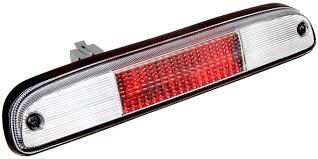
In automotive lighting production, customization and engineering precision are essential for achieving consistent performance across diverse vehicle platforms where the OEM Automotive Lamp Mold serves as a core manufacturing solution that bridges design intent with large-scale production execution. As lighting systems become more complex, incorporating dynamic styling and advanced optical effects, OEM molds must deliver both flexibility and structural reliability. This requires integration of material engineering, thermal stability control, and high-precision machining technologies to ensure consistent output quality under industrial production conditions.
Material selection is one of the most important aspects of OEM mold development. High-grade tool steels and alloy systems are widely used due to their resistance to thermal fatigue, wear, and deformation during continuous injection cycles. These materials ensure stable performance while maintaining dimensional accuracy over long production runs. Surface treatments such as polishing and heat hardening improve both durability and optical performance. A well-engineered cavity surface ensures uniform light transmission and reduces visual defects such as haze or distortion. Thermal conductivity balance further ensures efficient cooling and stable production cycles.
Optical performance in OEM molds is controlled through micro-textured cavity design that shapes how light is diffused through the final lens. These micro-structures are engineered to ensure uniform brightness distribution and eliminate glare. Simulation tools are widely used to analyze optical behavior before manufacturing begins, reducing development time and improving design precision. Thermal management systems integrated into mold structures ensure stable temperature distribution, preventing deformation or shrinkage variations that could affect optical consistency. Cooling optimization is essential for maintaining stable production conditions.
Advanced machining processes such as CNC milling and EDM technology enable the creation of highly complex geometries required in modern automotive lighting systems. These technologies ensure tight tolerance control and high repeatability across production batches. Quality inspection methods, including 3D scanning and coordinate measurement systems, verify accuracy throughout manufacturing stages. Automation enhances production stability, reduces manual variation, and improves efficiency in large-scale OEM environments. Surface finishing processes are carefully controlled to ensure optical clarity and structural precision.
Lifecycle management strategies ensure long-term performance stability through predictive maintenance and continuous design optimization. Production data is analyzed to improve future mold structures and enhance efficiency. Engineers use real-time feedback systems to monitor wear patterns and optimize maintenance schedules. In this context, the OEM Automotive Lamp Mold represents a highly engineered system that integrates precision, durability, and adaptability. Taizhou Renxin Mould Co., Ltd. provides advanced OEM tooling solutions and engineering expertise, with further information available at https://www.rxmolds.com supporting global automotive lighting innovation.

 English
 French
 Spanish
 Portuguese
 Deutsch
 Turkish
 Dutch
Dutch
 Italiano
 Russian
 Romaian
 Portuguese (Brazil)
 Greek
Greek
 简体中文
简体中文
 日本語
日本語
 한국어
한국어
 繁体中文
繁体中文