

Breaking the Scaling Barrier: The Role of INano™ Optimux Microfluidic Equipment in Next-Gen LNP Formulation
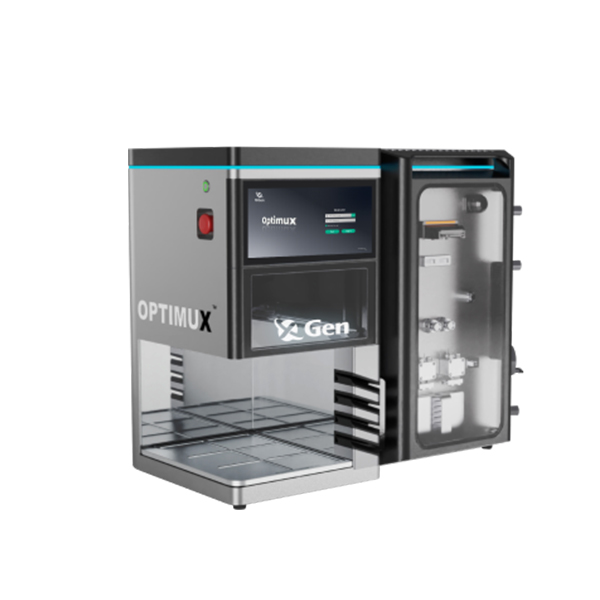
The rapid commercialization of RNA therapeutics, lipid nanoparticle (LNP) delivery systems, and precision nanomedicines is reshaping the global pharmaceutical manufacturing landscape. As demand increases for scalable and reproducible production, traditional batch processing methods are increasingly exposed for their limitations—particularly in particle uniformity, process repeatability, and seamless scale-up from laboratory research to clinical manufacturing.
To address these challenges, continuous-flow microfluidic technology has emerged as a core enabling platform in advanced pharmaceutical engineering. Among the latest innovations in this field, the INano™ Optimux Microfluidic Equipment, developed with technical support from XGen Bio, represents a significant step forward in multifunctional nanomedicine process development and GMP-grade manufacturing.
Designed for automated process optimization, upstream and downstream research integration, and clinical-scale production, the INano™ Optimux platform delivers high levels of flexibility, scalability, and operational reliability for modern nanomedicine workflows.
Why Continuous Microfluidic Manufacturing Is Transforming Nanomedicine
Nanomedicine production requires extremely tight control over multiple process parameters, including:
- Mixing kinetics
- Particle size distribution
- Encapsulation efficiency
- Solvent exchange dynamics
- Flow stability
- Shear-sensitive biomaterial handling
Conventional stirred-tank or batch mixing methods often struggle to maintain consistency across these variables. This leads to variability in nanoparticle morphology and challenges in reproducibility—especially when transitioning from early-stage R&D to clinical-scale manufacturing.
In contrast, continuous microfluidic systems provide a fundamentally different approach by enabling:
- Laminar flow-controlled mixing environments
- Rapid and uniform nanoparticle self-assembly
- High batch-to-batch reproducibility
- Real-time process parameter optimization
- Linear and predictable scale-up pathways
- Reduced material waste during development
For LNP-based therapeutics and nucleic acid delivery platforms, these advantages are critical for both regulatory compliance and commercial scalability.
INano™ Optimux: A Fully Integrated GMP-Ready Microfluidic Platform
The INano™ Optimux system is not simply a laboratory microfluidic mixer. It is a fully integrated continuous nanomedicine manufacturing platform designed to support the entire product lifecycle—from early development to clinical production.
🔬 1. Automated Process Development for LNP Scale-Up
One of the major bottlenecks in nanomedicine commercialization is transferring optimized laboratory conditions into scalable manufacturing processes.
The INano™ Optimux platform addresses this through automated process development functions that allow precise optimization of:
- Total flow rate (TFR)
- Flow rate ratio (FRR)
- Lipid composition systems
- Solvent selection strategies
- Encapsulation efficiency parameters
- Particle size tuning controls
This automation significantly improves CMC (Chemistry, Manufacturing, and Controls) development efficiency while reducing experimental variability.
For developers working on mRNA vaccines, siRNA therapeutics, and gene-editing delivery systems, this capability shortens development timelines and improves process robustness.
🏭 2. GMP-Compliant Continuous Manufacturing Architecture
As regulatory standards for nanomedicine continue to tighten globally, pharmaceutical companies require systems capable of supporting:
- GMP-compliant production environments
- Full process traceability
- High reproducibility standards
- Contamination risk control
- Scalable validation workflows
The INano™ Optimux Microfluidic Equipment is engineered specifically for GMP-oriented nanomedicine manufacturing.
Its continuous-flow design minimizes manual intervention while enhancing process consistency across production batches. This is especially valuable for:
- Clinical trial material production
- IND-enabling manufacturing workflows
- Personalized medicine applications
- Commercial-scale validation processes
The platform also supports standardized operational protocols aligned with modern pharmaceutical quality systems.
⚙️ 3. Integrated Upstream and Downstream Research Capability
Unlike conventional microfluidic systems focused solely on nanoparticle formation, INano™ Optimux supports a broader research and development workflow.
It enables integrated studies across:
- Nanoparticle formulation optimization
- Solvent exchange mechanism analysis
- Purification process development
- Process analytical technology (PAT) integration
- Stability evaluation workflows
- Continuous manufacturing research models
This multifunctional capability allows researchers to streamline development processes within a single unified platform, improving efficiency and experimental consistency.
Role of INano™ Optimux in LNP Manufacturing
Lipid nanoparticles are a cornerstone of modern pharmaceutical innovation, widely used in:
- mRNA vaccine delivery systems
- CRISPR gene editing platforms
- Cancer immunotherapy applications
- RNA-based therapeutic development
- Targeted nucleic acid delivery
LNP manufacturing requires highly controlled assembly conditions. Even minor variations in flow dynamics can significantly impact:
- Particle uniformity
- Encapsulation efficiency
- Drug stability
- Biodistribution behavior
- Therapeutic performance
The precision flow control technology of INano™ Optimux ensures stable and reproducible nanoparticle formation, making it particularly suitable for both preclinical and clinical-scale production environments.
Engineering Reliability for Pharmaceutical Manufacturing Systems
In continuous manufacturing environments, process stability is a critical requirement. Equipment failures, unstable flow behavior, or inconsistent nanoparticle formation can lead to costly production disruptions, especially in clinical-grade material manufacturing.
XGen Bio positions the INano™ Optimux platform as a reliability-driven engineering solution through:
- High-stability continuous flow architecture
- Precision fluidic control systems
- Modular system configuration design
- Automated process control workflows
- GMP-compatible system integration
- Scalable production architecture
This engineering philosophy aligns closely with the pharmaceutical industry’s increasing adoption of Quality by Design (QbD) and continuous process verification frameworks.
Why the Industry Is Shifting Toward Microfluidic Platforms
The pharmaceutical manufacturing sector is undergoing a structural shift away from traditional batch processing toward integrated continuous manufacturing technologies.
Key industry drivers include:
- Expansion of RNA therapeutic pipelines
- Increasing regulatory expectations for reproducibility
- Faster clinical development timelines
- Demand for scalable nanoparticle production systems
- Cost reduction in manufacturing operations
- Improved process control and validation
Advanced platforms like INano™ Optimux provide a practical solution to these challenges by combining scalability with process precision and regulatory alignment.
For organizations developing next-generation nanomedicines, microfluidic systems are no longer optional laboratory tools—they are strategic manufacturing assets.
Conclusion
As global nanomedicine development accelerates, pharmaceutical manufacturers require technologies capable of bridging the gap between laboratory innovation and clinical-scale production.
The INano™ Optimux Microfluidic Equipment provides an integrated solution for:
- Automated LNP formulation development
- GMP-compliant nanomedicine manufacturing
- Continuous-flow pharmaceutical production
- Clinical-scale process transition
- Integrated upstream and downstream research workflows
By combining precision engineering, scalable design, and multifunctional process capability, XGen Bio delivers a forward-looking platform designed to support the next generation of RNA therapeutics and advanced nanomedicine manufacturing systems.

 English
 Arabic
 French
 Spanish
 Portuguese
 Turkish
 Dutch
Dutch
 Italiano
 Russian
 Romaian
 Portuguese (Brazil)
 Greek
Greek
 简体中文
简体中文
 日本語
日本語
 한국어
한국어
 繁体中文
繁体中文