

Why Are Workers Choosing Jingli Power Rotary Hammers For Site Work?
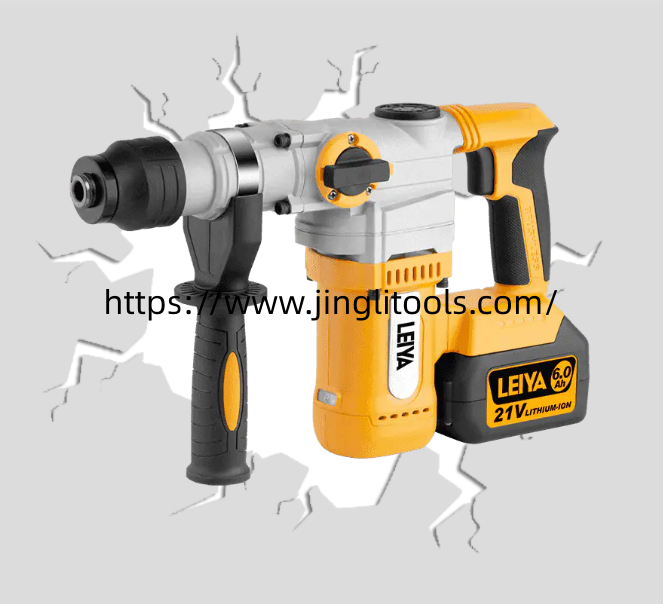
Power Rotary Hammers are widely used in construction and renovation environments where drilling into concrete, masonry, and stone materials is required. These tools are designed to handle demanding tasks that standard drilling equipment may not support effectively. In many building and renovation projects, selecting the appropriate tool plays an important role in ensuring stable workflow and consistent results.
In construction sites, drilling tasks often involve reinforced concrete structures. Workers may need to create anchor holes, install fixtures, or prepare surfaces for further structural work. Rotary hammer systems are commonly used in these situations because they combine drilling and hammering functions, allowing them to break through hard materials with controlled force.
Renovation projects also rely on similar equipment, especially when modifying existing buildings. Tasks such as removing old tiles, drilling into walls for installations, or upgrading structural components require tools that can handle different material conditions. In these environments, flexibility and adaptability become important factors when selecting equipment.
Another important aspect is operational stability. Construction environments often involve continuous tool usage over extended periods. Equipment designed for rotary hammering applications typically focuses on maintaining consistent performance under repetitive workload conditions. This helps support workflow continuity on active job sites.
Material compatibility is also a key consideration. Different projects involve different surfaces, including concrete, brick, and natural stone. Each material requires specific drilling approaches. Rotary hammer systems are often selected because they can adjust to various material conditions without requiring multiple separate tools.
Ease of handling is another factor in construction and renovation work. Job sites may require workers to operate tools in different positions, including overhead or vertical drilling. Equipment design, weight distribution, and grip structure can influence how easily the tool can be used during extended tasks.
Safety awareness is also part of tool selection in construction environments. Proper handling, stable control systems, and vibration management can help improve working conditions during drilling operations. These considerations are especially important in long-term renovation projects where repeated use is required.
Different project scales may require different equipment configurations. Small renovation jobs may involve light drilling tasks, while large construction projects may require continuous heavy-duty operation. Selecting suitable equipment depends on the expected workload and material requirements of each project.
Jingli develops industrial drilling tools designed for construction and renovation environments where performance consistency and practical usability are important. By focusing on application needs, material compatibility, and operational conditions, users can select tools that match their project requirements.
As construction and renovation activities continue to expand, reliable drilling tools remain an essential part of daily operations. Equipment selection plays a key role in supporting workflow efficiency and project progress. For more information about industrial tools and construction applications, visit https://www.jinglitools.com/

 English
 Arabic
 French
 Spanish
 Portuguese
 Deutsch
 Turkish
 Dutch
Dutch
 Italiano
 Russian
 Portuguese (Brazil)
 Greek
Greek
 简体中文
简体中文
 日本語
日本語
 한국어
한국어
 繁体中文
繁体中文