

Why Inline Dispersing System-Low Viscosity IDS Is Reshaping Industrial Mixing Efficiency
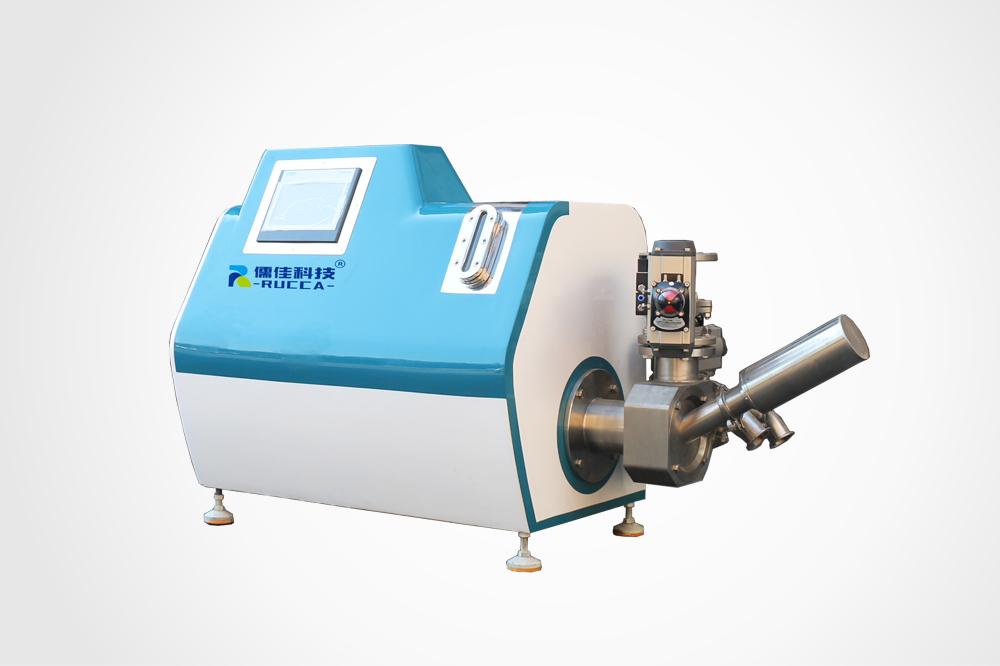
In modern chemical processing, advanced fluid dynamics have largely replaced traditional batch mixing systems. For industries processing low-viscosity fluids—such as water-borne industrial coatings, electronic chemical slurries, pharmaceutical emulsions, and functional food additives—traditional top-entry agitators are no longer efficient enough.
Conventional processing methods often struggle with un-wetted powder agglomerates, known as "fish-eyes," long cycle times, and high energy loss. When processing low-viscosity materials, standard mixing often fails to generate enough fluid shear stress to break down agglomerates into their primary particle sizes.
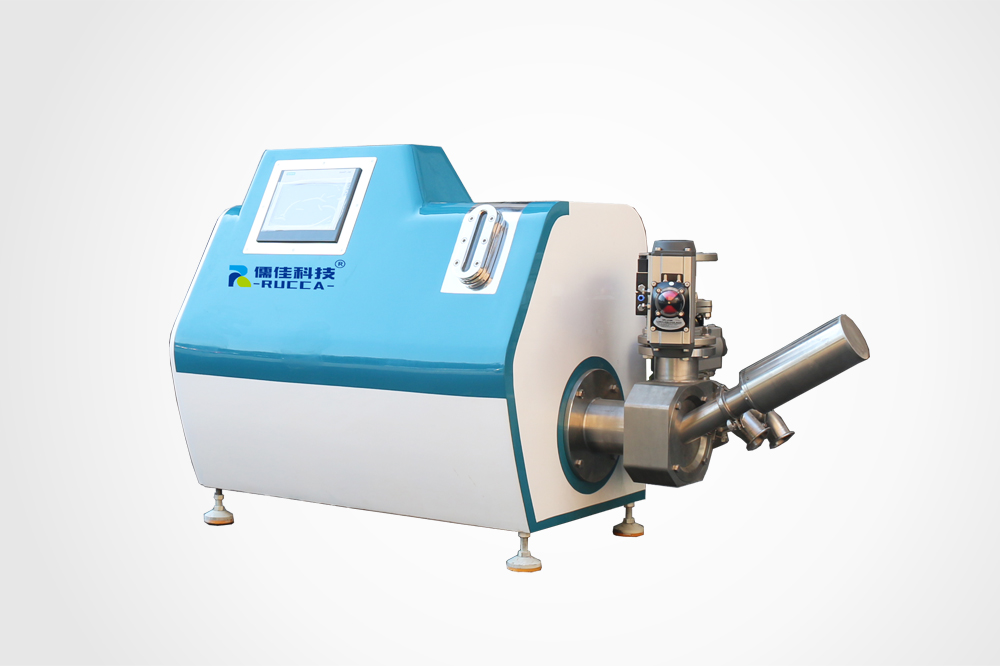
To solve these processing challenges, Rucca has developed a specialized powder-induction and micro-mixing solution: the Inline dispersing system-low viscosity IDS. This system uses a precise macro-flow architecture designed to integrate dust-free powder induction, immediate cluster wetting, and high-shear dispersion into a single continuous process loop.
The Physics of Hydrodynamic Shear and Rapid Wetting Mechanics
To understand how the system works, one must analyze the physical behavior within the rotor-stator dispersion chamber. Traditional batch processing relies on fluid-on-fluid shear, which drops significantly as the bulk viscosity decreases. The Rucca low-viscosity inline powder induction machine changes this dynamic by creating a controlled mechanical and hydrodynamic shear field.
The process consists of three distinct thermodynamic and mechanical phases:
-
Vacuum Generation and Powder Induction: The high-speed rotation of the precision-balanced rotor creates a powerful Venturi vacuum at the powder injection port. This allows dry powders to be drawn directly into the liquid stream from bulk bags or silos without requiring external air-delivery systems.
-
Sub-Surface Micro-Wetting: Powder and liquid meet at the exact point of highest shear. The dry particles are completely wetted within milliseconds before they can form micro-clusters or thick gels, maximizing raw material yield.
-
High-Velocity Mechanical Shear: The mixture is forced through a tight rotor-stator gap, experiencing high shear rates and rapid pressure drops. This mechanical energy breaks down agglomerates directly into sub-micron or nanometer ranges.
Overcoming Cavitation Wear and Phase Separation in Low-Viscosity Fluids
Processing low-viscosity fluids at high shear velocities carries an inherent risk: hydrodynamic cavitation. When local static pressures drop below the vapor pressure of the liquid medium, micro-bubbles form and violently collapse against the internal machinery. This cavitation can erode standard stainless steel components and cause localized thermal degradation of sensitive chemical formulations.
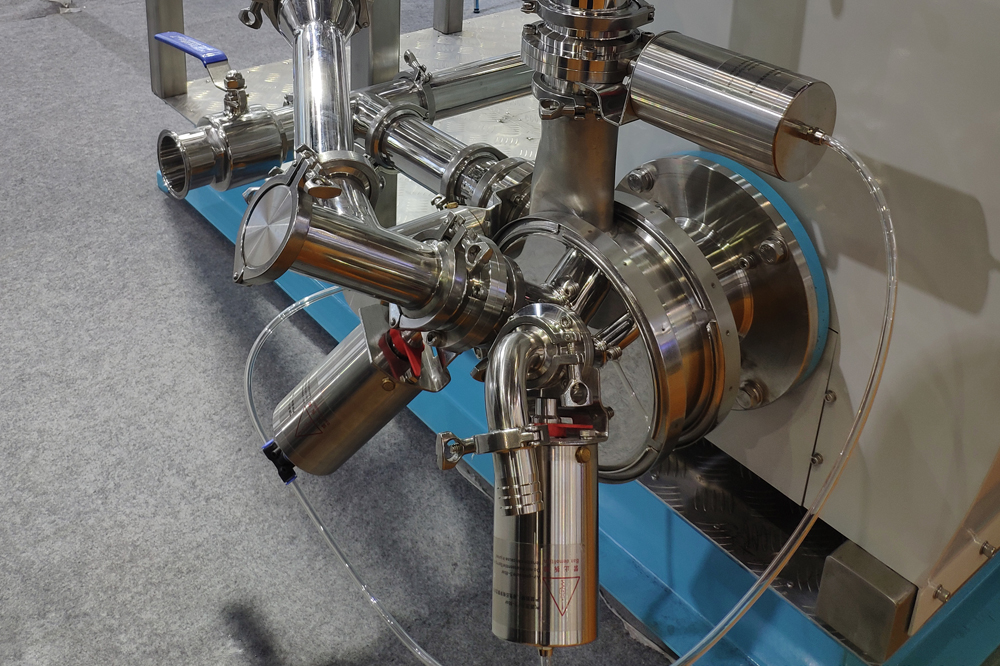
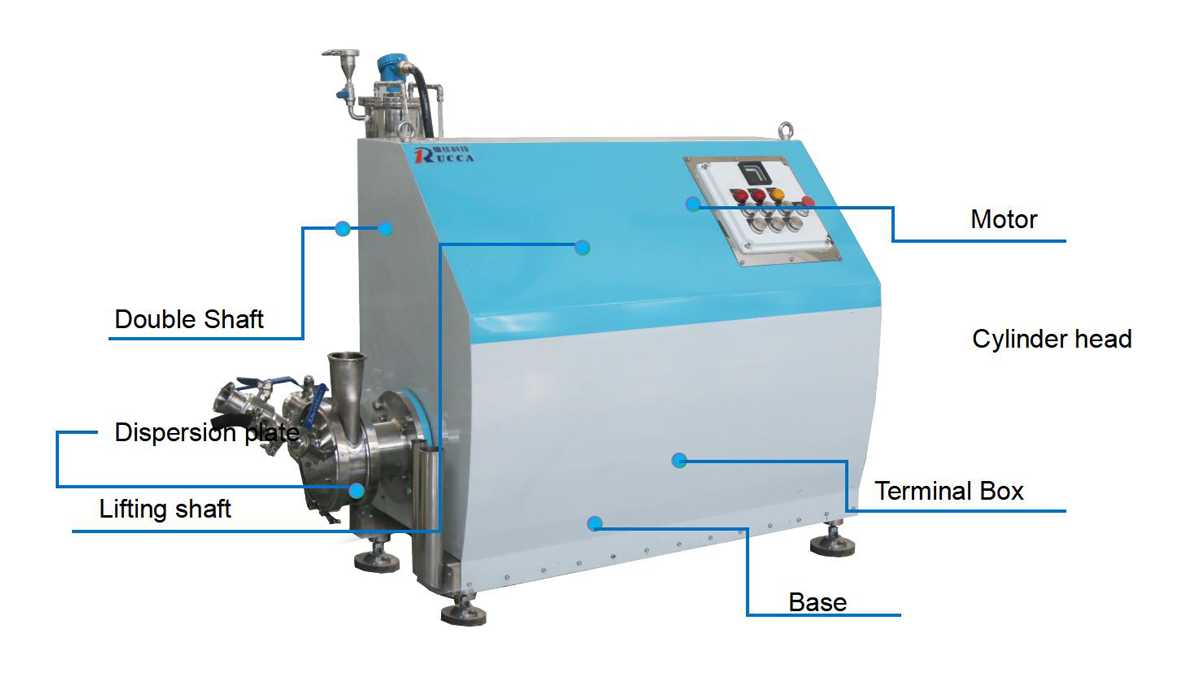
The high-shear inline dispersing system for water-borne coatings engineered by Rucca solves this through optimized internal fluid channels. Our engineers use advanced computational fluid dynamics (CFD) to design smooth internal geometries that maintain stable pressure profiles throughout the shearing zone.
Furthermore, the rotor and stator components are machined from hardened, wear-resistant alloys or treated with advanced technical ceramics. This enables the Rucca system to run continuously at high RPMs without contaminating high-purity chemical processes with metallic wear particles.
Process Decoupling: Scaling from Batch Tanks to ContinuousProcessing Loops
Integrating a continuous inline dispersing system for chemical processing allows manufacturingplants to transition from traditional batch processing to modern inline manufacturing. Thisarchitectural upgrade provides significant advantages for global manufacturing facilities:
Footprint and Energy Reduction: A single inline system can replace multiple large batch tanks0equipped with oversized high-speed dispersers, lowering plant energy consumption by up to50%.
Elimination of Air Entrainment: Because powder induction occurs under a closed vacuum, thesystem prevents ambient air from becoming trapped in the fluid. This eliminates the need forlong de-aeration hold times or expensive chemical defoamers.
Excellent Batch Repeatability: Every milliliter of fluid passes through the exact samemechanical shear gap, ensuring consistent particle size distributions (PD1) and eliminatingbatch-to-batch variations.
Industrial Applications: Electronics, Coatings, and Life Sciences
The specialized design of the Rucca IDS platform makes it highly effective across demanding, low-viscosity industrial sectors:
Functional Electronic Materials
For lithium-ion battery conductive slurries and ceramic dielectric suspensions, the system ensuresuniform carbon nanotube (C'NT) or metal oxide distribution within low-viscosity solvents,preventing settling and maintaining electrical conductivity.
High-Performance Industrial Coatings
The system accelerates the wetting and stabilization of fine pigments and silica matting agents intowater-borne resins, maximizing color development, gloss consistency, and scratch resistance.

 English
 Arabic
 French
 Spanish
 Portuguese
 Deutsch
 Turkish
 Dutch
Dutch
 Italiano
 Russian
 Romaian
 Portuguese (Brazil)
 Greek
Greek
 简体中文
简体中文
 日本語
日本語
 한국어
한국어