

How High-Quality Super-Heavy Duty Reaming Shells Improve Drilling Efficiency
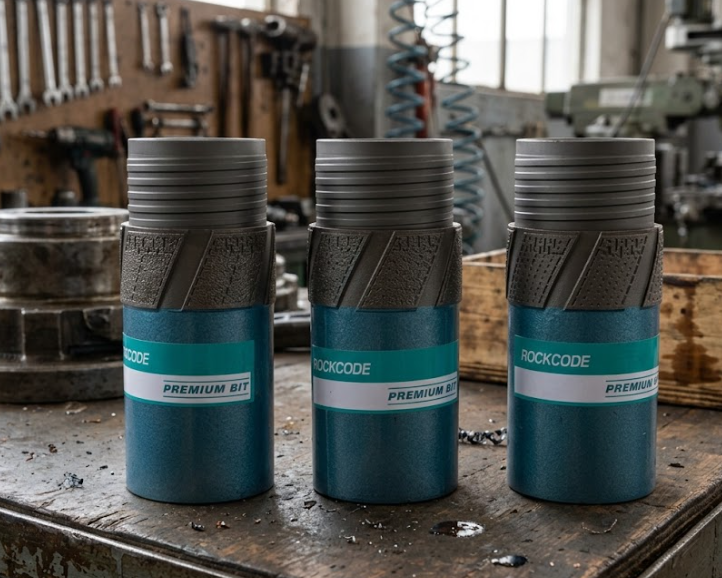
In diamond core drilling, the drill bit often receives the most attention because it directly cuts the formation. However, experienced drilling contractors know that the overall performance of a drilling system depends on how well every drilling tool works together. One often overlooked but essential tool is the super-heavy duty reaming shell.
A properly designed reaming shell helps maintain borehole gauge, stabilizes the drilling assembly, reduces vibration, and protects the diamond core bit from excessive wear. In challenging geological conditions, selecting the correct reaming shell can significantly improve drilling efficiency and reduce the total cost per drilled meter.
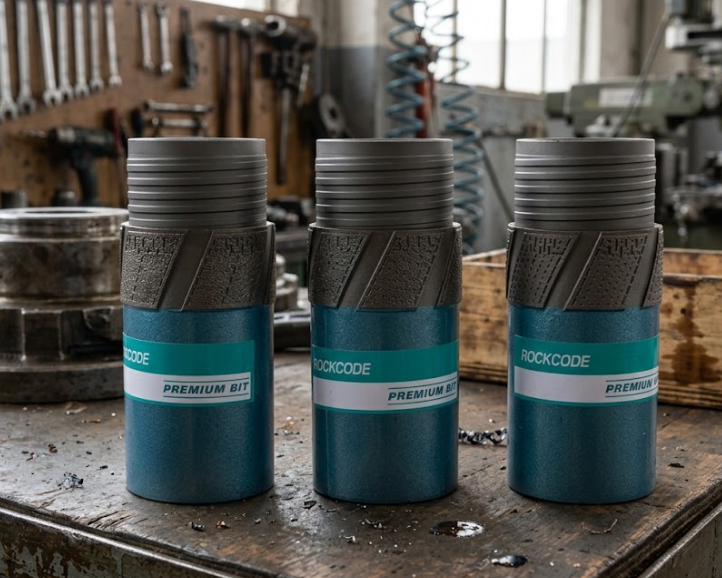
Why Standard Reaming Shells Fall Short in Hard Rock
Standard reaming shells perform adequately in moderate formations. However, when operators encounter granite, metamorphic granulite, or highly fractured zones with drillability ratings of 7–10, conventional tooling shows its limitations. Research on impregnated diamond core bits demonstrates that wear rates increase sharply with weight on bit (WOB) and rotary speed in hard rock environments. One study found that increasing WOB from 900 kg to 1250 kg caused wear rates to jump from 0.20 mg/mm to 0.50 mg/mm in standard matrix compositions. The same research showed that adding chromium diboride (CrB₂) to the carbide matrix reduced wear rates by approximately 50% through grain refinement and improved diamond retention.[1]
The matrix erosion mechanism presents another challenge. Field and laboratory studies of diamond drill bit wear reveal that matrix material fails through distinct patterns: erosion from rock cuttings in turbulent flow, three-body abrasion under high load, and delamination where rock adheres to and pulls away matrix material. The study, conducted at Luleå University of Technology and documented in a comprehensive doctoral thesis, found that ridge formation behind diamond cutting elements directly correlates with load conditions and water flow rates. At higher WOB, ridge sizes increased from 77 µm to 116 µm, indicating accelerated matrix loss.[2]
For reaming shells, which operate under similar mechanical and hydraulic conditions, these wear mechanisms are equally relevant. The shell's outer diameter must maintain precise gauge while its matrix withstands continuous abrasive contact. In deep-hole applications where deviation control is critical, any loss of gauge or shell integrity risks the entire borehole.
Design Elements of a Super-Heavy Duty Reaming Shell
A properly engineered super-heavy duty reaming shell incorporates several distinguishing features. Thermally stable polycrystalline (TSP) diamond pins provide reinforcement at high-wear zones, extending operational life beyond that of conventional natural diamond configurations. The matrix itself requires careful formulation: tungsten carbide content, cobalt binder ratios, and additive systems like CrB₂ all influence how the shell performs when granite quartz content exceeds 25%.
Double-ring configurations offer additional stability. The second ring provides redundant gauge control and improves drill string centering in deviated holes. For operations where hole straightness is paramount, dual-pad designs with extended body lengths help resist side forces that cause spiral hole patterns.
Fluid passage geometry deserves equal attention. Helical flute designs improve cuttings transport and reduce pressure drop across the tool. In deep drilling where pump capacity is limited, unrestricted flow paths prevent balling and overheating—conditions that accelerate diamond degradation and matrix erosion.
The Connection to Casing and Rod Shoes
Reaming shells do not function in isolation. Their performance depends on compatible tooling throughout the drill string. Casing shoes and rod shoes serve as the foundation for proper borehole construction, preventing casing from catching on irregularities and protecting the lower drill string assembly. When these components are matched in specification and manufacturing quality, the entire system operates with reduced vibration and more predictable wear patterns.
The same metallurgical controls applied to our super-heavy duty reaming shells extend to our casing rod shoes, ensuring compatible hardness profiles and thread integrity across the full assembly. For operations requiring integrated solutions, our product range includes matched sets designed for specific DCDMA and metric thread systems.
Field Performance and Operational Economics
The economic case for premium reaming shells becomes clear when examining drilling cost structures. A field study comparing diamond core bits to roller bits in hard granite demonstrated that diamond tooling achieved nearly 100% core recovery with bit life extending to 137.75 meters, while roller bits managed only 76.2% recovery with significantly shorter operational spans. The diamond bit maintained an average rate of penetration (ROP) of 4.4 m/h under optimized WOB conditions of 1.5 tonnes.[3]
These metrics translate directly to reaming shell economics. Every trip to change out a worn shell represents rig downtime, often exceeding the replacement part cost by orders of magnitude. In international exploration projects where remote site logistics compound expenses, extending shell life from 200 meters to 400 meters of penetration yields substantial project savings. The super-heavy duty designation signifies not merely thicker matrix or larger diamonds, but a system-level approach to durability that accounts for the full operating envelope.
Research on drill bit wear resistance across different coating systems provides additional context. When drilling granite with high quartz content, diamond-like carbon (DLC) coated drill bits showed a wear rate reduction of approximately 42% compared to conventional tungsten carbide tools. TiAlSi coatings exhibited an even more significant improvement, with a wear rate reduction of 48%. Although these coatings are primarily applied to cutting structures, their fundamental principle—protecting the substrate from wear through an advanced material system—directly guides the design of reaming housing substrates.[4]
Manufacturing Quality and Material Traceability
Specification compliance can vary significantly across the global supply chain. While ISO 9001 certification provides an important quality management framework, critical drilling applications require more comprehensive evaluation. Raw material sourcing from established steel producers, precision CNC machining of shell bodies, and controlled-atmosphere sintering of diamond-matrix compositions all play essential roles in ensuring consistent product quality, reliable performance, and long service life under demanding geological drilling conditions.
Our production includes spark plasma sintering (SPS) capabilities for specialized orders, enabling the fine-grained carbide structures that research has linked to improved wear resistance. For standard super-heavy duty reaming shells, we maintain inventory across AQ, BQ, NQ, HQ, and PQ wireline sizes, with oversized and special configurations available on request.
Selection Guidance for Procurement Professionals
When evaluating super-heavy duty reaming shells for upcoming projects, several parameters warrant close examination:
-
Diamond specification: Synthetic versus natural, grain size distribution, and concentration all affect cutting efficiency and longevity in specific rock types.
-
Matrix hardness: Harder matrices resist erosion in abrasive formations but may polish in softer ground; matching to expected geology is essential.
-
Body steel grade: The shell body must withstand torque and bending loads without distortion that would compromise gauge.
-
Thread precision: DCDMA-standard threads with proper pitch diameter control prevent galling and ensure reliable make-break cycles.
Requesting test data from suppliers, including wear rate measurements under controlled conditions, provides objective comparison material. Reputable manufacturers should document their quality control procedures and provide material certifications with each shipment.
Conclusion
The super-heavy duty reaming shell is a specialized drilling tool designed for geological exploration projects where conventional reaming shells may not provide sufficient durability or stability. Advances in matrix metallurgy, supported by peer-reviewed research, have demonstrated that optimized matrix formulations, refined grain structures, and carefully engineered additive systems can significantly improve wear resistance and operational life. Field experience also shows that well-designed diamond drilling tools contribute to better borehole stability, higher core recovery, and more consistent drilling performance in abrasive and hard rock formations.
For exploration projects operating in demanding geological environments, selecting premium reaming shells with proven matrix technology can help reduce unplanned downtime, extend tool service life, and maintain stable drilling parameters throughout the project. Although higher-quality tooling may involve a greater initial investment, it often delivers lower overall drilling costs through improved operational efficiency and reduced tool replacement frequency.
At ROCKCODE, we focus on providing reliable diamond drilling solutions for geological exploration, including super-heavy duty reaming shells, casing rod shoes, and other wireline core drilling tools. Drawing on extensive experience with international exploration projects, ROCKCODE supports customers with practical tooling recommendations based on formation characteristics, drilling objectives, and project requirements, helping achieve stable performance across a wide range of drilling conditions.
→ For more information about ROCKCODE’s Products, please visit: https://www.rockcodebit.com/drill-bits-products
→ Email us at: info@rockcodebit.com
→ Information in this article is for general reference only. For specific drilling projects and drilling bits, please consult qualified professionals. Thank you.
Source:

 English
 French
 Spanish
 Portuguese
 Deutsch
 Turkish
 Dutch
Dutch
 Italiano
 Russian
 Romaian
 Portuguese (Brazil)
 Greek
Greek
 简体中文
简体中文
 日本語
日本語
 한국어
한국어
 繁体中文
繁体中文