

Why Does Bit Size Matter For jiangsuxinfeng Power Rotary Hammers?
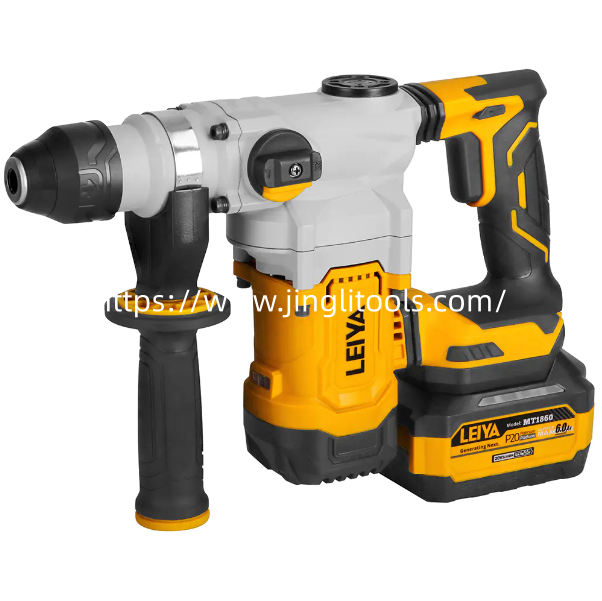
Power Rotary Hammers are designed for applications where ordinary drilling action may not provide the impact needed for concrete, brick, block, and other masonry materials. Choosing a suitable model requires more than looking at motor power. The job itself should guide the decision, including hole diameter, drilling depth, material type, operating frequency, accessory system, and whether the tool will also be used for chiseling.
Start With the Material
Concrete and masonry can look similar from a distance, but their working characteristics can differ considerably. Concrete may contain aggregate and reinforcement, while brick and block can vary in density and structure.
Before selecting a tool, identify the material and the type of work involved. Installing anchors in concrete may require a different configuration from removing tiles, creating channels for cables, or drilling through brick walls.
The material also influences bit selection. SDS accessories are commonly used with rotary hammer systems, and SDS-Plus and SDS-Max are not interchangeable formats. Buyers should therefore confirm that the tool and accessories use the same shank system. Recent technical guidance highlights shank compatibility as a key part of rotary hammer selection.
How Does Hole Size Affect Selection?
Hole diameter is another practical starting point.
Small anchor holes generally place different demands on a tool than large-diameter drilling. A contractor installing wall anchors may need a compact configuration, while a construction team creating larger openings may require a heavier system with greater impact energy and compatible accessories.
Instead of selecting a tool based only on its stated power, buyers can compare the manufacturer's recommended drilling range with their regular applications.
For distributors, this approach can also help organize product categories according to actual customer requirements. A compact model can be positioned for installation and maintenance work, while larger configurations may be intended for more demanding construction applications.
Why Does Impact Energy Matter?
Impact energy describes the energy delivered by the hammer mechanism to the bit during each impact. It is commonly expressed in joules and can be an important specification when working with hard materials.
A tool intended for small anchor holes does not necessarily need the same impact class as equipment used for larger drilling or chiseling operations. Recent technical guidance groups rotary hammers into different impact ranges according to drilling and chiseling requirements.
The goal is to match impact energy with the job. An unnecessarily heavy configuration can make handling less convenient, while insufficient impact capacity may not suit demanding applications. Looking at the complete application gives buyers a clearer basis for comparison.
When Should You Consider SDS-Plus or SDS-Max?
The accessory system should match the work.
SDS-Plus is widely associated with smaller and medium drilling applications, including anchor installation, electrical work, plumbing preparation, and general masonry tasks. SDS-Max is designed around larger accessories and heavier applications.
The exact drilling range depends on the specific tool and manufacturer, so buyers should always check the published specifications rather than assuming that every SDS system has the same capacity. Current industry references continue to distinguish SDS-Plus and SDS-Max according to bit dimensions, impact class, and application requirements.
For distributors, offering both configurations can provide flexibility when serving customers with different project requirements.
What About Chiseling Functions?
Some rotary hammer models provide more than hammer drilling.
Depending on the configuration, operating modes may include rotary drilling, hammer drilling, and hammer-only operation. Hammer-only mode can be useful for applications such as tile removal, light chiseling, channel preparation, and other masonry-related work.
The operating mode should be selected according to the task and the accessory being used. A drill bit and chisel perform different functions, so users should follow the tool manufacturer's recommendations for compatible accessories and operating conditions.
This versatility can be useful for contractors who handle several types of renovation or installation work during the same project.
Corded or Cordless?
Power source is another decision that depends on the working environment.
Cordless models can be convenient on construction sites where workers move between locations or where access to electrical outlets is limited. Battery capacity, charging arrangements, voltage, tool weight, and the number of available batteries should be considered together.
Corded models can suit fixed work areas where continuous electrical access is available. They may also be practical for workshops or renovation projects where the tool remains in one general location.
Neither configuration should be selected simply because it is cordless or corded. The better approach is to consider where the tool will be used and how long it will operate during a normal workday.
How Important Are Tool Weight and Handling?
Concrete work can involve repeated drilling, overhead installation, or work in confined spaces. Tool weight and physical balance can therefore affect operator handling.
A compact configuration may be convenient for anchor installation and maintenance work, while a larger tool may be appropriate for larger holes or heavier applications. Additional handles can also provide greater control when the manufacturer includes them as part of the design.
For professional users, these details can influence how naturally the equipment fits into daily work. Buyers should consider the complete tool configuration rather than focusing on one specification.
Match the Tool With the Actual Job
Before purchasing, create a short list of typical applications.
For example, a contractor may regularly install anchors in concrete, drill holes through brick, remove tiles, or create channels for electrical installations. Each task can then be connected with the required bit type, hole size, impact class, operating mode, and power source.
jiangsuxinfeng provides power tool manufacturing solutions for workshop, construction, maintenance, and industrial applications. Buyers can compare available configurations according to product specifications, accessories, packaging requirements, and intended markets.
For distributors, this application-based approach can also make product planning easier. Instead of presenting customers with a long list of specifications, products can be organized around the jobs they are designed to support.
Build Your Selection Around Concrete and Masonry Needs
The right selection begins with the material and ends with the actual working conditions. Consider hole diameter, drilling depth, impact energy, SDS compatibility, operating modes, power source, tool weight, and expected working frequency before making a purchasing decision.
jiangsuxinfeng offers rotary hammer and power tool solutions for customers serving different construction and maintenance applications. Product information and available solutions can be reviewed at https://www.jinglitools.com/

 English
 Arabic
 French
 Portuguese
 Deutsch
 Turkish
 Dutch
Dutch
 Italiano
 Russian
 Romaian
 Portuguese (Brazil)
 Greek
Greek
 简体中文
简体中文
 日本語
日本語
 한국어
한국어
 繁体中文
繁体中文