

Cold Forging Die Design: Enhancing Efficiency and Precision in Manufacturing
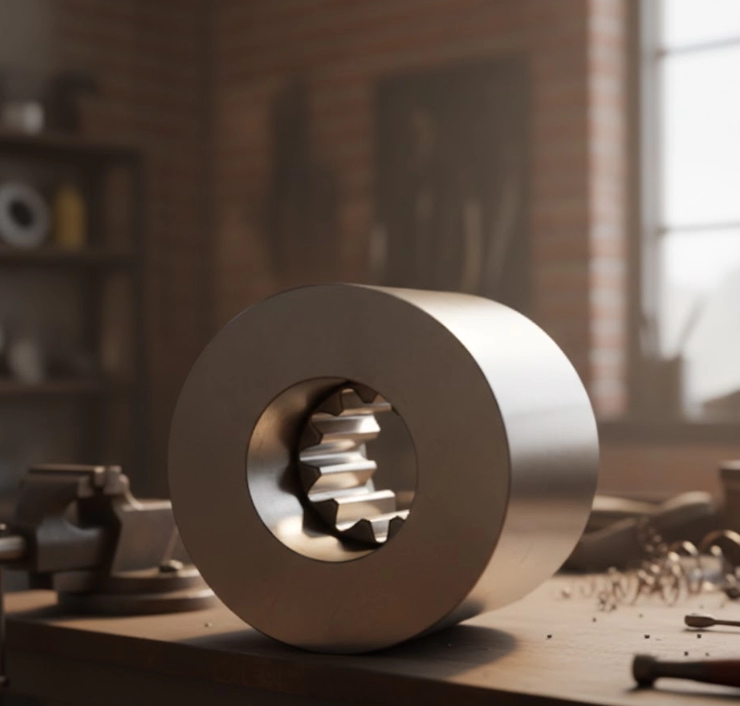
In high-volume metal forming, success is rarely defined by machinery alone. Instead, it is the invisible engineering inside the tooling that determines dimensional accuracy, production stability, and total manufacturing cost. At the core of this equation lies cold forging die design—a highly specialized discipline that blends mechanics, metallurgy, and process control into a single, performance-critical system.
As global manufacturers push toward tighter tolerances, higher-strength materials, and longer production cycles, advanced die engineering has become a decisive competitive advantage. Companies such as Hongli Technology are redefining cold forging die design by focusing on durability, repeatability, and application-specific optimization rather than standardized tooling concepts.

Understanding Cold Forging Die Design
Cold forging involves shaping metal at room temperature, which enhances its mechanical properties and reduces the need for extensive machining. The die design is crucial in this process, as it directly influences the material flow, surface finish, and overall geometry of the forged part. A well-designed die can significantly reduce production costs and lead times while improving product quality.
Key Considerations in Die Design
-
Material Selection: The choice of materials for die construction is paramount. High-strength tool steels are commonly used due to their durability and resistance to wear. Additionally, coatings such as titanium nitride can enhance the die's lifespan and performance.
-
Die Geometry: The shape and configuration of the die must be meticulously planned. Factors such as draft angles, fillet radii, and parting lines are essential to ensure smooth material flow and minimize defects. A well-thought-out geometry can also facilitate easier part ejection.
-
Simulation and Analysis: Advanced simulation software plays a crucial role in modern die design. Finite Element Analysis (FEA) allows engineers to predict how the material will behave under various conditions, enabling them to optimize the die design before physical production. This not only saves time but also reduces the risk of costly errors.
-
Cooling and Heating Systems: In some cases, integrating cooling or heating systems within the die can improve the forging process. Controlled temperature can enhance material flow and reduce the risk of defects, particularly in complex geometries.
-
Maintenance and Repair: Designing for maintainability is often overlooked. A die that is easy to maintain and repair can significantly extend its operational life and reduce downtime. Incorporating features that allow for quick inspections and replacements can lead to more efficient production processes.
Innovations in Cold Forging Die Design
The field of cold forging die design is continuously evolving, driven by advancements in technology and materials science. Hongli Technology is at the forefront of these innovations, employing cutting-edge techniques to enhance die performance and longevity.
-
Additive Manufacturing: The use of 3D printing in die production is gaining traction. This technology allows for the creation of complex geometries that would be challenging or impossible to achieve with traditional machining methods. It also enables rapid prototyping, allowing for faster iterations in the design process.
-
Smart Dies: The integration of sensors and IoT technology into die design is revolutionizing the industry. Smart dies can monitor parameters such as temperature, pressure, and wear in real-time, providing valuable data that can be used to optimize the forging process and predict maintenance needs.
-
Sustainable Practices: As industries move towards more sustainable practices, die design is also adapting. Utilizing recyclable materials and designing for energy efficiency are becoming essential considerations in the development of new dies.
Why Choose Hongli Technology for Cold Forging Die Design
With extensive experience in precision tooling, Hongli Technology provides:
-
Application-driven cold forging die design
-
Advanced simulation and material optimization
-
High-performance dies for long production cycles
-
Consistent quality for global manufacturing standards
By combining engineering depth with practical production insight, Hongli Technology helps manufacturers reduce downtime, lower tooling costs, and achieve stable, scalable output.
Conclusion
Cold forging die design is a complex yet rewarding aspect of manufacturing that requires a deep understanding of materials, engineering principles, and innovative technologies. By leveraging the expertise of companies like Hongli Technology, manufacturers can enhance their die designs, leading to improved efficiency, reduced costs, and superior product quality. As the industry continues to evolve, embracing new technologies and best practices will be essential for staying competitive in the global market.

 English
 Arabic
 French
 Spanish
 Portuguese
 Deutsch
 Turkish
 Dutch
Dutch
 Italiano
 Russian
 Romaian
 Portuguese (Brazil)
 Greek
Greek
 日本語
日本語
 한국어
한국어
 繁体中文
繁体中文