

Vibration in Diamond Drilling
What causes it, what it costs you, and how to fix it.
Why it matters
Vibration wastes cutting energy. Instead of steady torque driving the bit, you get cyclic bending and impact. The result:
-
Lower core recovery.
-
Faster diamond wear and loss.
-
More wear on rods, couplings, and barrels.
-
Lower ROP at the same WOB.
-
Can't run the RPM you need without the string going unstable.
How it starts
Diamond drill strings are long, slender, rotating, and under compression. Any geometry error or unstable load can trigger lateral motion. That motion grows when:
-
Clearance is large (more room for the rod to whip).
-
Compression is high (the string wants to bow).
-
Friction varies (stick–slip, torque spikes).
-
Alignment is off (eccentric rotation, side loading).
-
Cuttings don't clear smoothly (drag builds, then releases).
Field reality: vibration rarely has one cause. You usually get a trigger (bent rod, clearance, lithology change) plus an amplifier (RPM, feed, drag).
What you can control
Start here when vibration shows up.
Lubrication
-
Not enough grease → more friction between rod and wall.
-
Water gets in → grease breaks down, film strength drops.
-
Weak film → stick–slip and heat.
Parameters
-
Too much RPM → you're past the stability limit for that clearance and rod condition.
-
Too much feed/WOB → more compression, more chance of lateral deflection.
-
Change one thing at a time. Watch the torque.
Cuttings
-
Low flow or poor flushing → cuttings pack up, then flush out.
-
That cycle creates torque spikes at the bit and shell.
Rod condition
-
Bent rods, damaged threads, loose couplings → vibration starts here.
-
Small bends often happen near the collar where you handle them most.
-
Pull suspect rods early. Don't try to run them out.
What's harder to fix in the field
These need planning, matching tooling, or maintenance.
String fit
-
Rods too small for the hole → more deflection under compression.
-
Too much clearance → lateral motion has room to develop.
-
Worn rods or couplings → less concentricity, more wobble.
Bit and shell condition
-
Uneven wear, missing diamonds, poor gauge → asymmetric cutting.
-
Slow cuttings clearance at the face or annulus → cyclic drag.
-
Flat or glazed surfaces → chatter.
Formation
-
Broken or blocky ground.
-
Hard/soft layers alternating.
-
Foliation or bedding at an angle to the hole.
-
Cavities and caving zones that let the string deflect.
Note: vibration and deviation often share the same drivers.
How to fix it
Go after the root cause.
Increase stability
-
Run the largest rod size that fits the hole and program.
-
Keep couplings tight. Clean threads. Replace worn connections.
-
Keep rods and barrels straight. Set aside bent ones.
-
Use stabilizing features where it makes sense (ribs, wear pads).
Reduce friction and stick–slip
-
Use grease that sticks to wet rods and doesn't wash off.
-
Keep water out of the grease, especially underground.
-
Enough body to damp vibration without creating drag.
Match RPM and feed to the system
-
If vibration starts, drop RPM first. Check if torque stabilizes.
-
If it doesn't stop, drop feed/WOB. Check again.
-
Only bring RPM back up after things settle.
Improve flushing
-
Steady flow to avoid cuttings beds and cyclic drag.
-
If you see drag spikes, fix flushing before pushing parameters.
What it does to core recovery and diamond life
Vibration increases impact at the bit face and shoulder. It also increases side loading in the barrel. You get:
-
Core fractures or crumbles easier.
-
Fragments pack and block the barrel.
-
More sludge washout.
-
Diamond loss when impact loads spike at the gauge and shoulder.
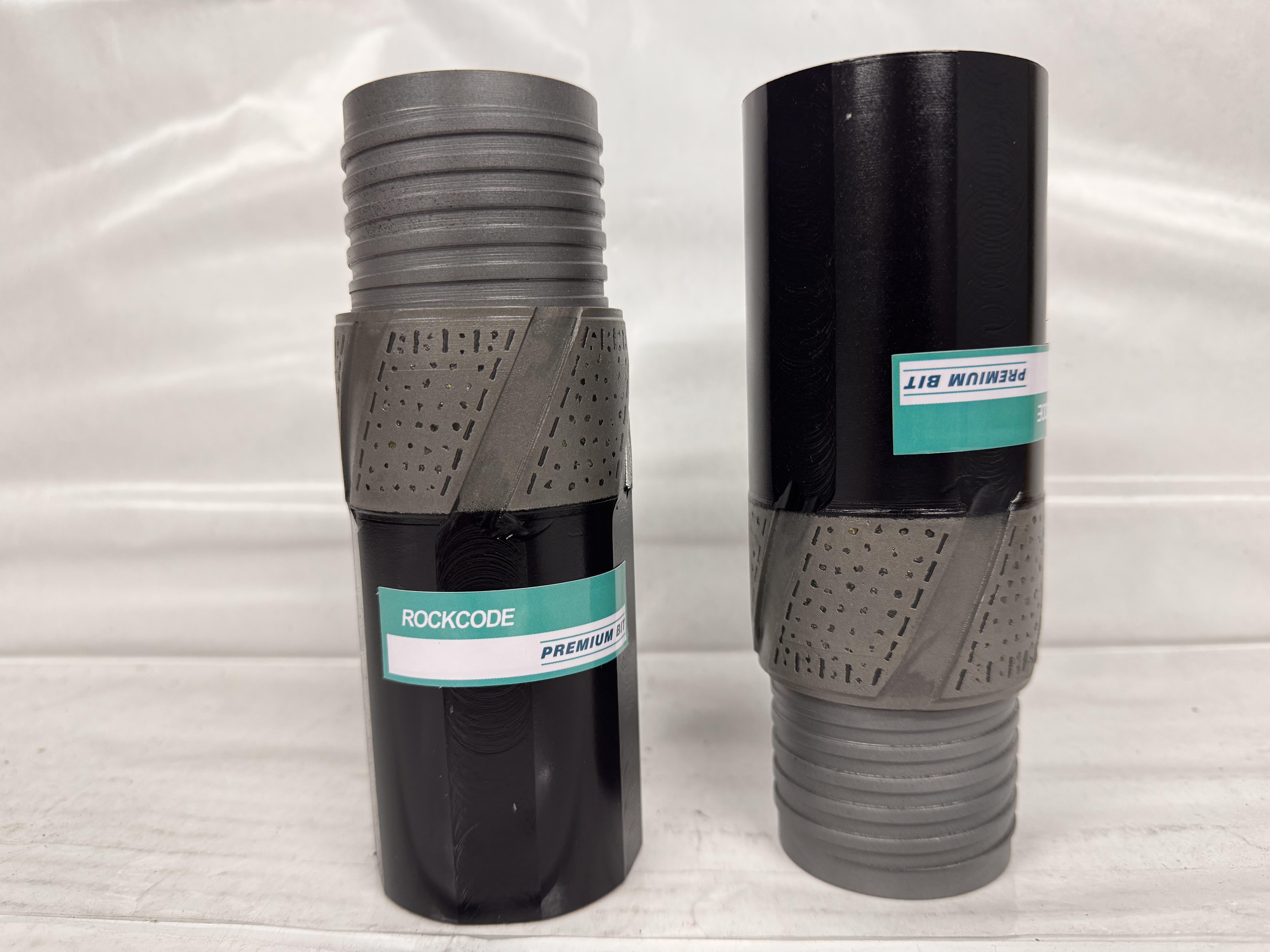
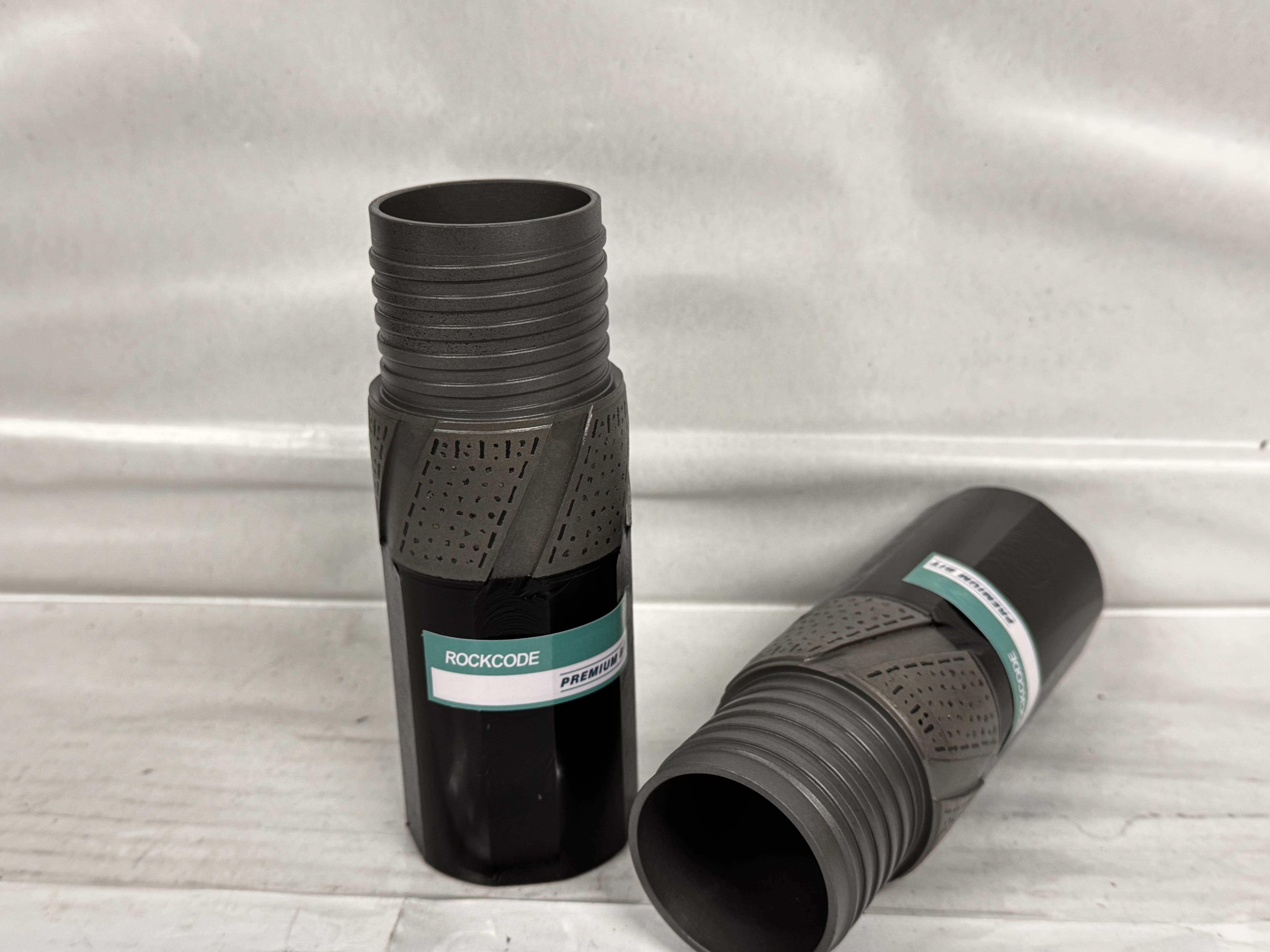
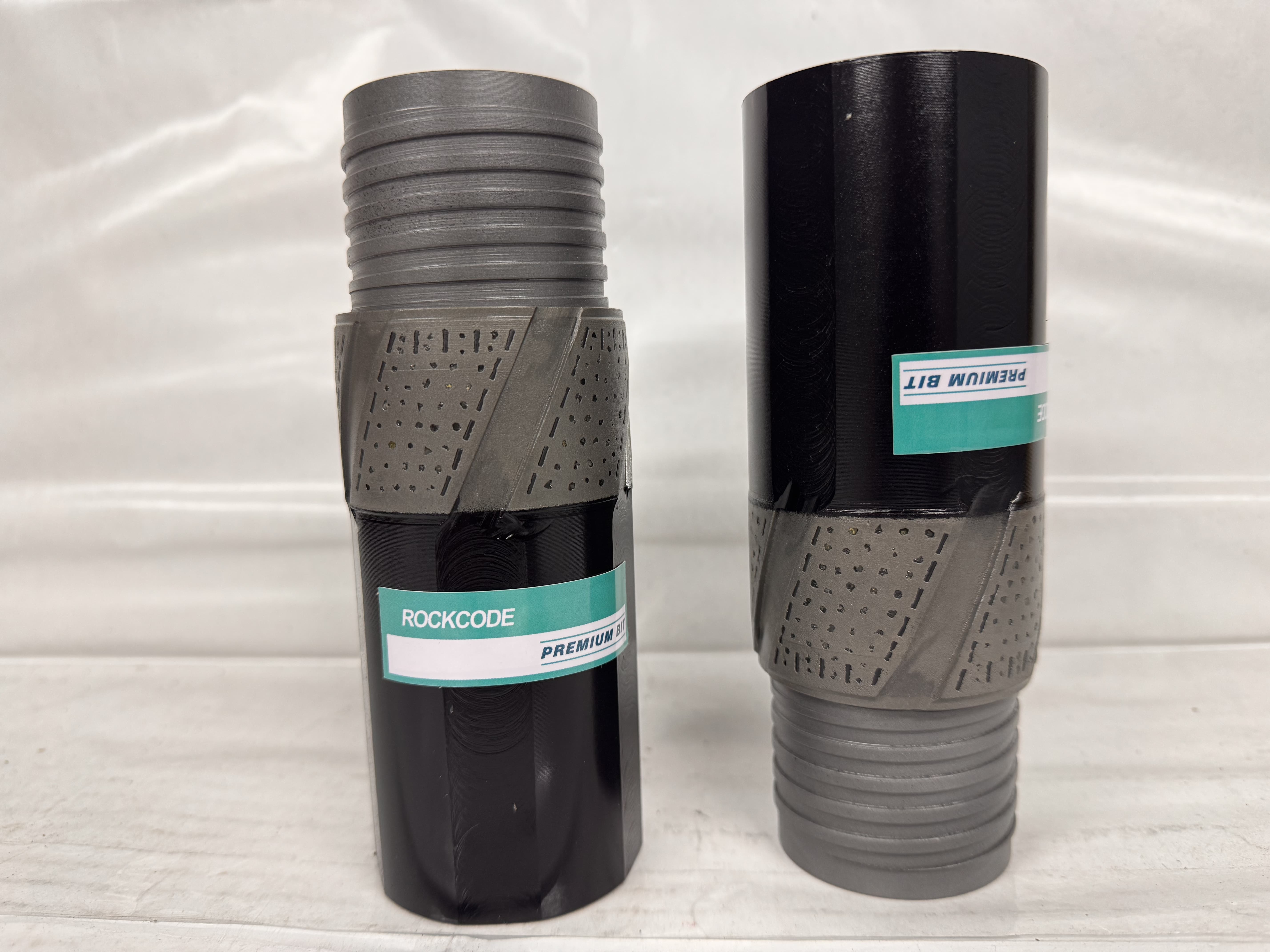
→ For more information about ROCKCODE’s Products, please visit: https://www.rockcodebit.com/reamers-stabilizer
→ Email us at: info@rockcodebit.com
→ Information in this article is for general reference only. For specific drilling projects and drilling bits, please consult qualified professionals. Thank you.
Source
【1】Cumming, J. D. (1956). Diamond drill handbook. (2nd ed.). Smit.
https://www.rockcodebit.com/vibration-in-diamond-drilling.html

 English
 Arabic
 French
 Spanish
 Portuguese
 Deutsch
 Dutch
Dutch
 Italiano
 Russian
 Romaian
 Portuguese (Brazil)
 Greek
Greek
 简体中文
简体中文
 日本語
日本語
 한국어
한국어
 繁体中文
繁体中文