

From Track Bed to High-Speed Lines: The Critical Role of Rail Nuts
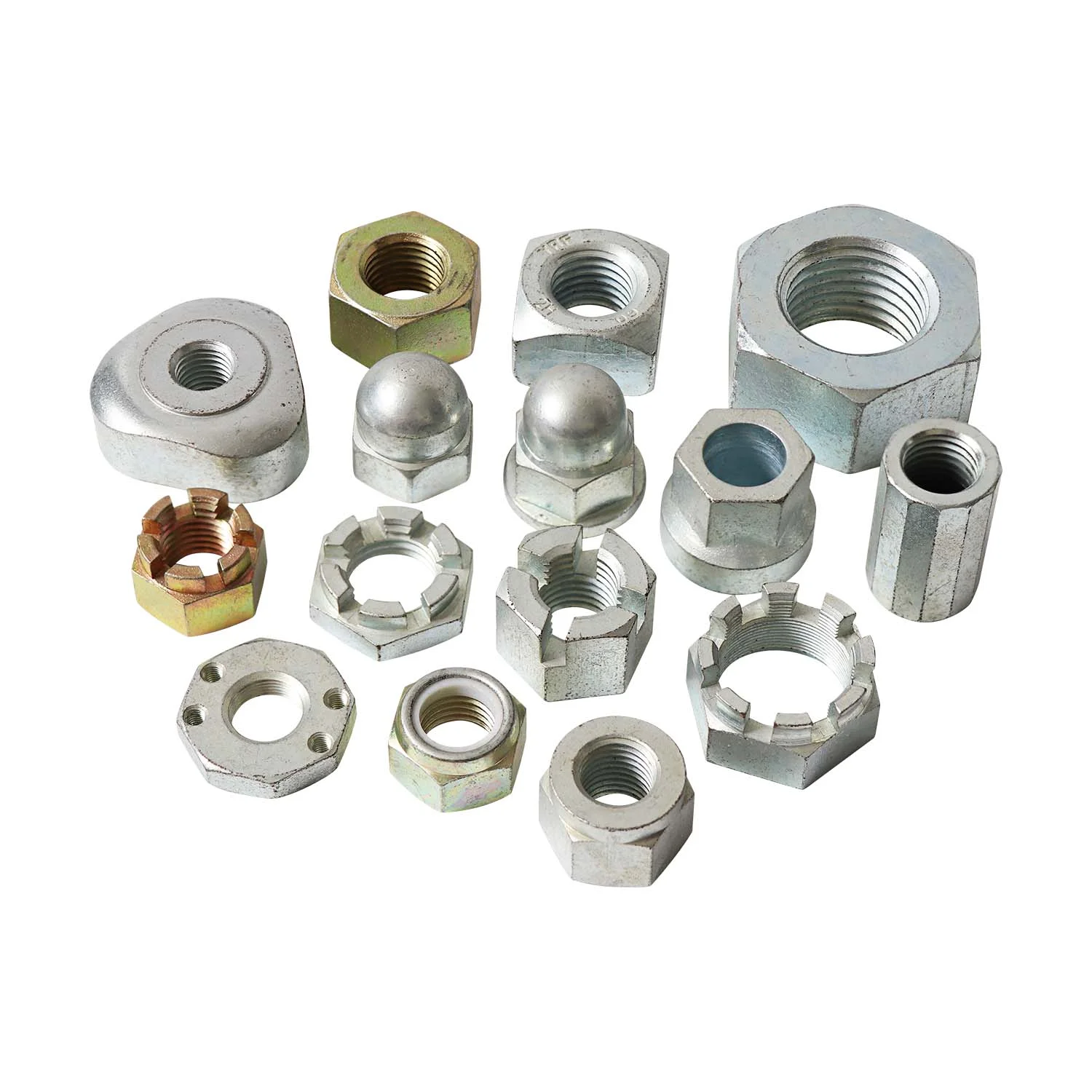
In railway engineering, fastening systems are not merely accessories—they are structural components that directly influence track safety, load distribution, and long-term durability. Among these components, Rail Nuts play a decisive role in maintaining rail alignment, securing joints, and ensuring resistance against dynamic vibration, thermal expansion, and cyclic fatigue.
For modern freight corridors, metro systems, and high-speed rail networks, precision-engineered rail nuts are indispensable. HuiBo Railway, a specialized manufacturer in railway fastening systems, delivers rail nuts that conform to international standards such as DIN, BS, and AREMA, ensuring compatibility across global rail infrastructures.
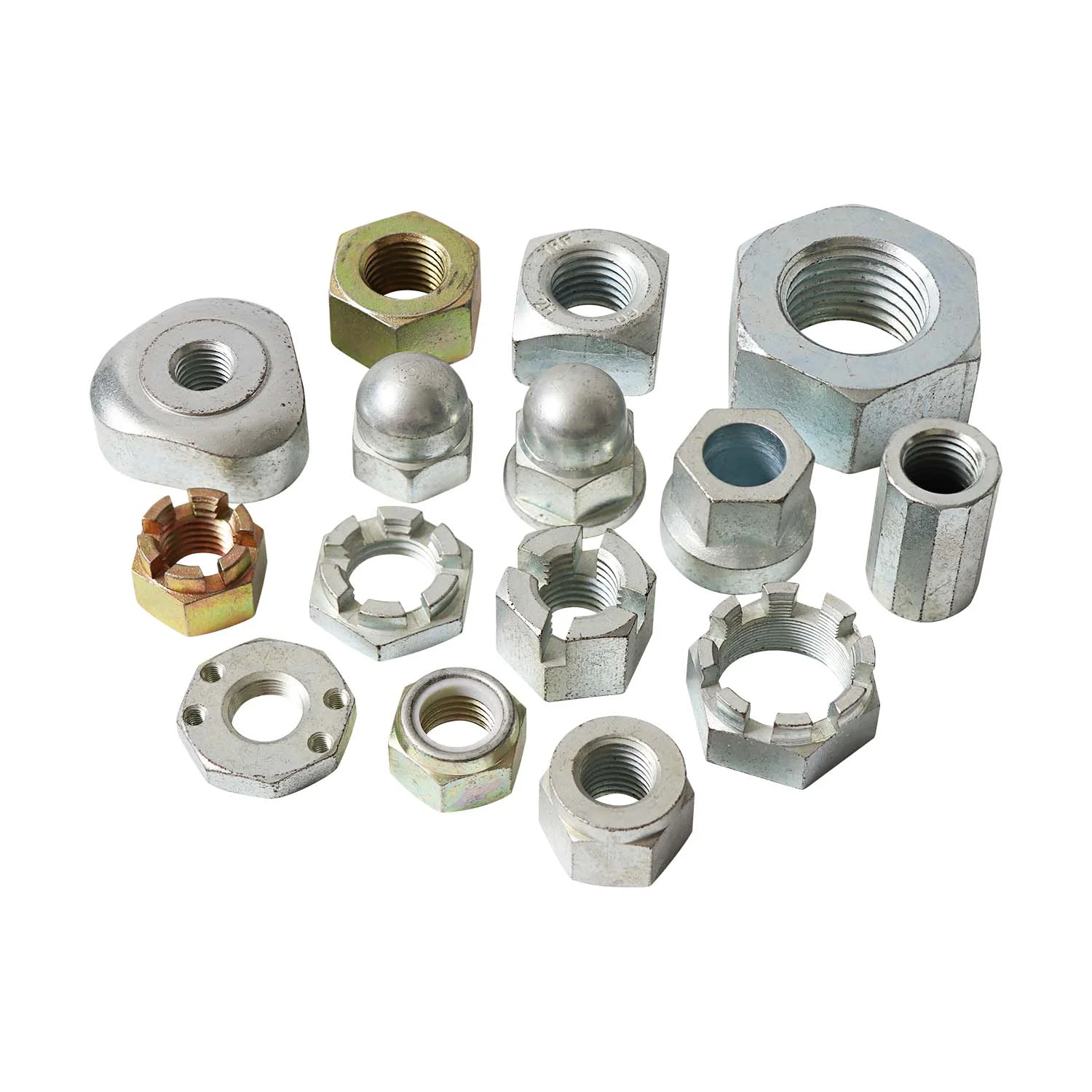
Understanding Rail Nuts in Railway Fastening Systems
Rail nuts are designed to secure rail bolts, fish bolts, and other fastening components that connect rails to sleepers or join rail sections. Their performance must withstand:
-
Heavy axial and lateral loads
-
Repeated impact forces from wheel-rail interaction
-
Temperature-induced expansion and contraction
-
Corrosive environmental exposure
Unlike conventional industrial nuts, rail nuts are engineered for high tensile strength, fatigue resistance, and dimensional accuracy, meeting stringent railway industry standards.
Types of Rail Nuts and Their Functional Differences
HuiBo Railway manufactures multiple structural configurations to meet diverse rail fastening requirements:
1. Hex Head Rail Nuts
Hex head rail nuts are widely used in rail joint assemblies and structural fastening applications. Their six-sided geometry enables easy torque application using standard tools while ensuring even load distribution.
Key Advantages:
-
High torque transmission efficiency
-
Suitable for heavy-duty fastening
-
Compatible with high-strength rail bolts
2. Square Head Rail Nuts
Square head nuts provide superior anti-rotation capability when installed in confined spaces or embedded slots. They are commonly applied in rail joint systems and specialized fastening assemblies.
Key Advantages:
-
Enhanced anti-slip performance
-
Stable positioning during tightening
-
Reliable in vibration-intensive environments
3. Flange Head Rail Nuts
Flange head rail nuts incorporate an integrated washer-like base that increases bearing surface area. This design reduces localized stress concentration and improves clamping force distribution.
Key Advantages:
-
Improved load dispersion
-
Reduced risk of loosening
-
Enhanced structural integrity
Each configuration is engineered according to precise dimensional tolerances to ensure interchangeability and mechanical consistency.
Compliance with International Standards: DIN, BS, AREMA
Rail infrastructure projects demand strict compliance with regional and international technical standards. HuiBo Railway supplies rail nuts manufactured in accordance with:
-
DIN (German Institute for Standardization) specifications
-
BS (British Standards) requirements
-
AREMA (American Railway Engineering and Maintenance-of-Way Association) guidelines
Compliance ensures:
-
Verified mechanical strength ratings
-
Consistent thread accuracy
-
Traceable material certification
-
Compatibility with global rail fastening systems
For railway contractors and infrastructure developers, standard conformity is not optional—it is fundamental for safety certification and long-term operational reliability.
Surface Treatments: Extending Service Life in Harsh Environments
Railway components are exposed to rain, humidity, salt spray, industrial pollution, and temperature extremes. Surface treatment directly impacts durability and lifecycle cost.
HuiBo Railway offers multiple surface finishes:
• Plain (Self-Color)
Suitable for controlled indoor environments or applications where secondary coating is applied.
• Black (Black Oxide)
Provides moderate corrosion resistance and improved surface lubricity.
• Zinc Plated
Offers enhanced corrosion resistance for moderate outdoor environments.
• HDG (Hot-Dip Galvanized)
HDG treatment delivers superior corrosion resistance, particularly suitable for coastal regions, high-humidity climates, and heavy-duty rail networks.
Hot-dip galvanizing creates a metallurgically bonded zinc layer that significantly prolongs service life, reducing maintenance intervals and total ownership cost.
Material Strength and Mechanical Performance
Rail nuts are typically manufactured from medium-carbon or alloy steels subjected to heat treatment processes such as quenching and tempering. Mechanical properties are carefully controlled to achieve:
-
High tensile strength
-
Excellent yield resistance
-
Superior fatigue performance
-
Reliable thread engagement
Precision machining ensures thread concentricity and load-bearing efficiency. Improper thread tolerances can lead to premature loosening, micro-movement, and eventual structural degradation.
HuiBo Railway emphasizes metallurgical control and non-destructive testing to maintain consistent mechanical performance across production batches.
The Role of Rail Nuts in Safety and Track Stability
Rail fastening systems operate under continuous dynamic loading. A minor fastening failure can escalate into:
-
Rail misalignment
-
Joint instability
-
Increased vibration
-
Accelerated track wear
-
Safety risks
High-performance rail nuts maintain clamping force integrity over extended service periods. Their role becomes even more critical in high-speed rail systems, where vibration frequency and thermal stresses are amplified.
By integrating advanced manufacturing processes with strict quality control protocols, HuiBo Railway ensures that every rail nut supports safe, stable, and efficient railway operation.
Application Areas
Rail nuts are widely applied in:
-
Freight rail networks
-
High-speed rail lines
-
Urban metro systems
-
Heavy-haul mining railways
-
Bridge and tunnel rail fastening assemblies
Each application may require different coating systems, strength grades, and dimensional standards, underscoring the importance of working with a specialized railway fastener manufacturer.
Why Choose HuiBo Railway for Rail Nuts?
HuiBo Railway combines:
-
Advanced forging and machining capabilities
-
International standard compliance
-
Customizable specifications
-
Comprehensive surface treatment options
-
Strict quality assurance systems
The company’s engineering expertise enables it to provide tailored fastening solutions for infrastructure projects across different climatic zones and regulatory frameworks.
When reliability is non-negotiable, precision-engineered rail nuts become a strategic investment rather than a commodity component.
Conclusion
Rail nuts may appear small compared to rails and sleepers, yet their mechanical reliability directly impacts railway system integrity. From hex head to flange head configurations, from DIN to AREMA compliance, and from plain finish to HDG protection, each specification matters.
For infrastructure developers and railway contractors seeking durability, safety, and compliance, HuiBo Railway delivers rail nuts engineered to perform under the most demanding operational conditions.
In railway engineering, performance is measured not just in strength—but in sustained reliability over millions of load cycles. Rail nuts are at the core of that equation.

 English
 Arabic
 French
 Spanish
 Portuguese
 Turkish
 Dutch
Dutch
 Italiano
 Russian
 Romaian
 Portuguese (Brazil)
 Greek
Greek
 简体中文
简体中文
 日本語
日本語
 한국어
한국어
 繁体中文
繁体中文